
22/10/2026 14:33
Can Buyers Hear the Wheels? YouTube Music Choices for Cambodian Trolley Shops

A trolley demonstration can look clear while leaving the buyer’s main question unanswered: what does it sound like when it moves? Background music may cover the rumble over a floor joint, the swivel of a caster, or the presenter’s explanation of the surface. For Cambodian shops supplying market vendors, cafés and small warehouses, those details can make a video more useful than another polished product montage. This workflow explains how to plan the recording, choose optional music from YouTube’s Audio Library, preserve meaningful product sound and review the finished video before promotion. It also explains why an SMM service listing cannot establish that viewers understood the demonstration or intend to buy.
Start with one question the recording can answer
Choose a narrow demonstration question before choosing a soundtrack. A useful question is whether viewers can hear this trolley crossing the shop’s tiled floor. A much broader claim, such as suitability for every warehouse surface, cannot be established by that recording. Write down the product shown, the floor surface and whether the trolley is empty or carrying a stated load. These details help the presenter describe what viewers are actually seeing.
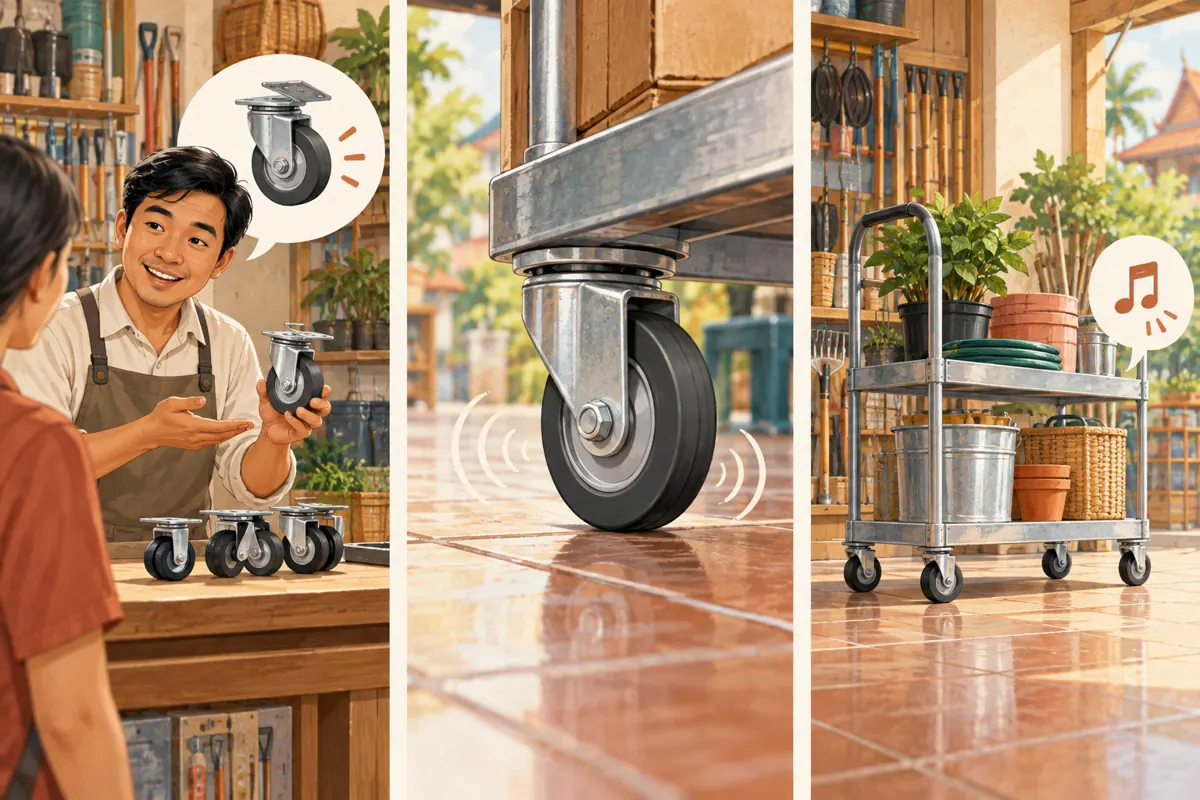
In a hypothetical Phnom Penh shop, customers ask whether a replacement caster will be suitable for moving café supplies indoors. The owner decides to demonstrate an assembled trolley travelling across a tile joint. The video will show the wheel and explain the setup, then pause the narration while it rolls. It will invite customers to send mounting measurements and describe their floor before requesting a recommendation.
Decide whether music serves this particular video
Music is optional. If the entire video depends on hearing movement, an introduction followed by natural sound may be enough. If the video includes a shop introduction, product close-ups and a closing contact instruction, music can accompany those supporting moments. Make the decision section by section. There is no need to run a continuous soundtrack simply because the editing software offers a music track.
Use a straightforward rule: whenever the viewer must judge a sound or understand an important spoken detail, remove anything competing with it. For this trolley demonstration, the wheel crossing the joint deserves an uninterrupted listening interval. A background beat that resembles a clunk could confuse the evidence. Even pleasant music can distract from a short Khmer explanation of the mounting plate or brake operation.
Capture a usable original recording
Record a short trial before filming the full demonstration. Listen for nearby conversation, a shop radio, passing traffic and fingers rubbing against the phone. Move to a quieter part of the shop when practical, keeping the filming conditions relevant to the demonstration. Place the phone consistently and keep the operator clear of the trolley’s path. A quieter recording environment usually gives the editor less distracting material to manage.
If comparing two wheel options, keep the surface, route, load and recording position as similar as practical. Explain any meaningful difference. Do not record one trolley close to the microphone and the other across the room, then present their apparent loudness as a fair comparison. A phone recording is an illustration of those conditions, not a calibrated sound test or proof that the product will behave identically in a customer’s premises.
Choose Audio Library material and retain its details
YouTube’s official instructions place Audio Library in the left menu of YouTube Studio. Its music search supports filters including mood, genre, duration and attribution. Preview a candidate before downloading it. For a practical shop video, choose music that leaves room for speech and can end naturally before the demonstration. A busy rhythm can create unnecessary editing work.
Check the selected track’s license type. YouTube explains that Creative Commons tracks require artist credit in the video description and provides attribution text to copy. An Attribution not required filter is also available. Keep the track title, artist, downloaded filename and applicable credit together with the video project. Follow the official Audio Library guidance linked in the sources; do not assume a separate channel advertising free music is the same resource.
Build three listening zones in the edit
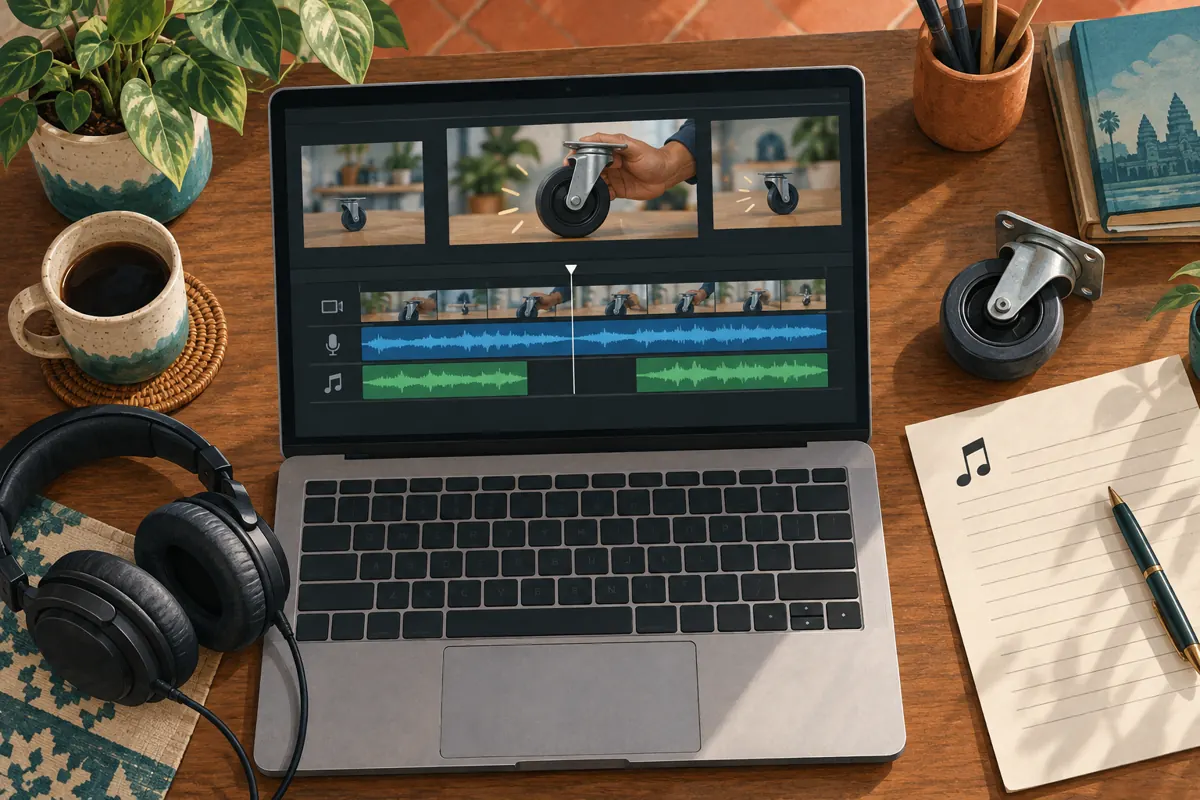
Organize the video into introduction, demonstration and next step. In the introduction, identify the trolley and recording conditions. During the demonstration, let the original wheel sound remain audible without music or narration. In the final section, explain which measurements a buyer should provide. This structure gives each sound a purpose and makes the editing decision easier than repeatedly adjusting a soundtrack underneath every sentence.
In your editing application, keep the original recording separate from the added music where possible. End or fade the music before the wheel starts moving, leaving a small breathing space. Bring it back only after the useful sound finishes. Review the transition itself: an abrupt musical cut can resemble a recording fault, while a long fade may still cover the first movement. Keep the untouched source recording so revisions remain possible.
Preserve evidence when cleaning the sound
Noise reduction can change the sound the buyer is meant to assess. If a processing setting removes the rattle along with background noise, the edited result no longer represents the original demonstration faithfully. Compare the processed and original versions at a consistent listening volume. When the important sound becomes difficult to distinguish, reduce the processing or record again under better conditions.
Never add a library rolling sound and present it as the trolley’s actual sound. A decorative effect can be appropriate in an obviously stylized introduction, but it should stay outside the evidence-bearing demonstration. Similarly, avoid turning one option down to make it appear quieter. If the original recording is unusable, describe the limitation and replace the take. A clean-looking video does not justify manufacturing a more persuasive listening experience.
Give Cambodian buyers enough context to act
Prepare the spoken explanation in the language your customers use, with clear Khmer wording where appropriate. Keep genuine model references and measurement units consistent across speech, captions and the product description. Describe the actual surface shown rather than calling it a typical Cambodian floor. A smooth shop tile and a rough outdoor loading area can create very different questions for the buyer.
Include visual information for people watching without sound. Show the wheel, mounting arrangement and floor joint clearly, and identify when the natural-sound demonstration begins. The closing instruction should ask for useful purchasing information: a mounting photo, relevant dimensions, intended load and operating surface. Avoid asking viewers to infer suitability from the soundtrack. A request for a specific measurement is a clearer next step than a general invitation to react.
Review the exported video on ordinary devices
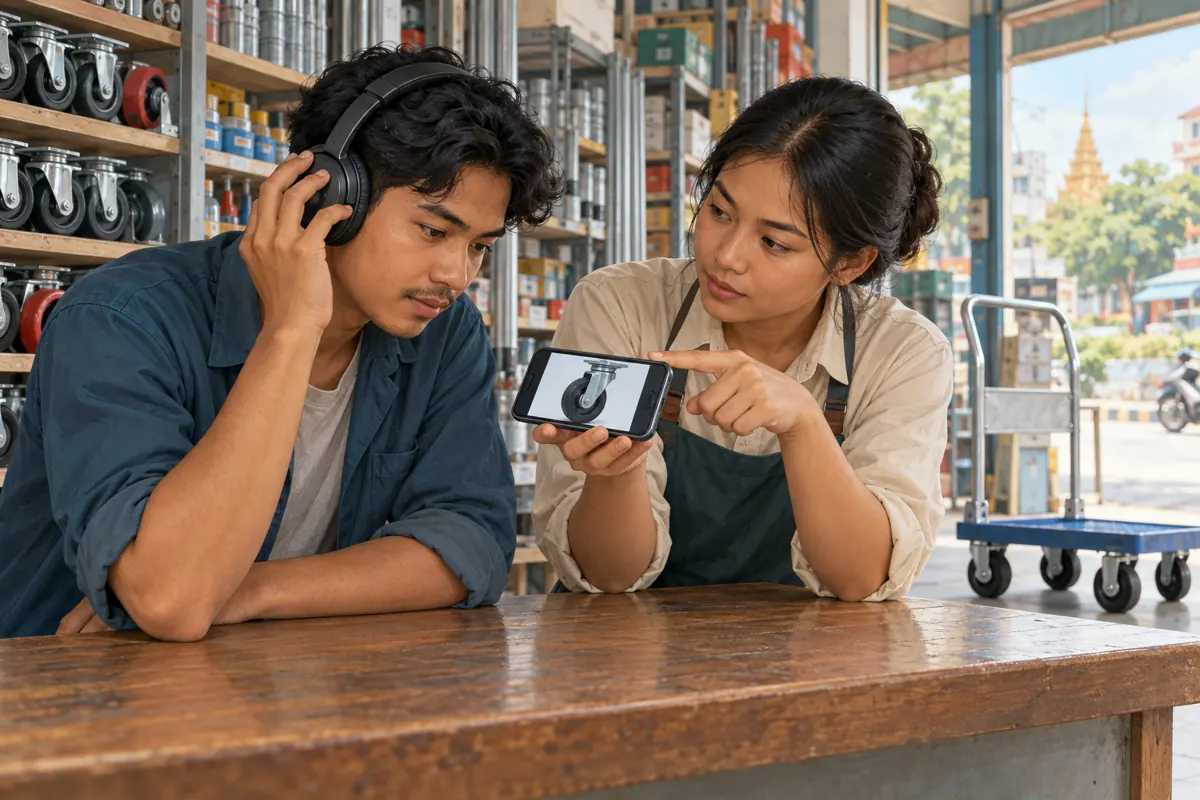
Listen to the exported file through headphones and a phone speaker. The purpose is to catch a missing sound, distracting transition or unclear sentence under different listening conditions. Keep playback at a comfortable volume rather than increasing it until a weak recording seems acceptable. Also watch once with sound off to check whether the visible explanation still identifies the product and its limitations.
Ask a colleague who did not edit the video to explain what was demonstrated. Can they identify the floor surface, whether the trolley was loaded and what information a buyer should send? If they report only that the music sounded pleasant, revise the presentation. After uploading, check the actual watch-page version and description as well. Approval of an editing preview does not establish that the final upload contains the intended sound or credit.
Apply a separate decision gate to SMM services
The supplied catalogue includes “YouTube - Views ~ 𝗥𝗘𝗙𝗜𝗟𝗟 30D ~ 5k-20k/days ~ [ 𝐒𝐨𝐮𝐫𝐜𝐞: External ]”. Its description is empty. The title labels it as a views service, but does not independently establish its method, audience origin, delivery, retention or suitability. Treat its embedded figures and terms as catalogue wording requiring verification. There is no basis here to infer Cambodian viewers or people shopping for trolley wheels.
YouTube’s fake engagement policy prohibits artificial increases in views and other metrics. It also explains that a hired promoter’s actions can affect the channel. Do not proceed with a service whose method artificially inflates engagement, or assume a panel listing makes the activity permitted. If the method cannot be explained sufficiently to assess compliance, leave the order unplaced. Purchased engagement is not evidence of genuine interest, sales, advertising delivery or Cambodian users.
Review buyer questions and improve the next demonstration
Keep a small enquiry log focused on what customers need to know. Record whether a question concerns wheel material, mounting fit, the floor, load or the sound in the clip. Note when someone explicitly says the video helped them understand a detail, without turning an isolated comment into a general performance claim. A quotation request and a completed purchase should remain separate outcomes.
Suppose, in a hypothetical review, buyers still ask whether the trolley was empty. Add that information more clearly to the next recording rather than buying more attention for the same ambiguity. If they ask about rough concrete, plan a separate demonstration on that surface and describe its conditions. Improve the evidence one question at a time. Keep promotion spending, service records and actual customer outcomes separate so a changing view count does not become an unsupported business conclusion.
Frequently asked questions
Does every trolley demonstration need background music?
No. A short introduction, clear natural sound and a useful closing instruction can form a complete video. Add music only when it supports a section without competing with the information. For a clip whose main purpose is hearing the wheels, leaving out music can simplify both editing and review.
Can I make a noisy recording sound cleaner before publishing?
You can improve intelligibility, but compare every adjustment with the original. Processing that removes a meaningful rattle or changes the apparent character of the wheel sound can misrepresent the demonstration. If background noise prevents a fair listening experience, a new recording is preferable to aggressive processing.
Does an automatic music credit replace the description credit?
YouTube says its automatic Music in this Video section does not replace required Creative Commons attribution in the description. Check the particular track and use the supplied attribution text when required. Keep that credit in the project handover so it survives later description edits.
Can I reuse the same soundtrack when posting the clip elsewhere?
Check the specific track’s applicable terms before reusing it on another platform. Do not treat access through YouTube as a blanket statement about every destination. Keeping an export with the original demonstration sound and no added music gives your team a practical starting point for separately reviewed versions.
How can I judge whether the video is useful without relying on views?
Check whether viewers can describe the demonstrated conditions and submit more relevant questions. Track actual enquiries, quotations and purchases separately, acknowledging when their connection to the video is unknown. These records help identify missing information; they do not automatically prove that the video caused a sale.
Explore the current service catalogue, create an account, or ask a specific question through support tickets.
- YouTube Help: Use music and sound effects from the Audio Library
- YouTube Help: Fake engagement policy
Prepared with AI assistance. Illustrations explain the workflow and do not represent customer results.