
20/10/2026 23:01
Choosing the Print or Following the Leader? Telegram Hidden-Result Polls for Cambodian Tote-Bag Shops
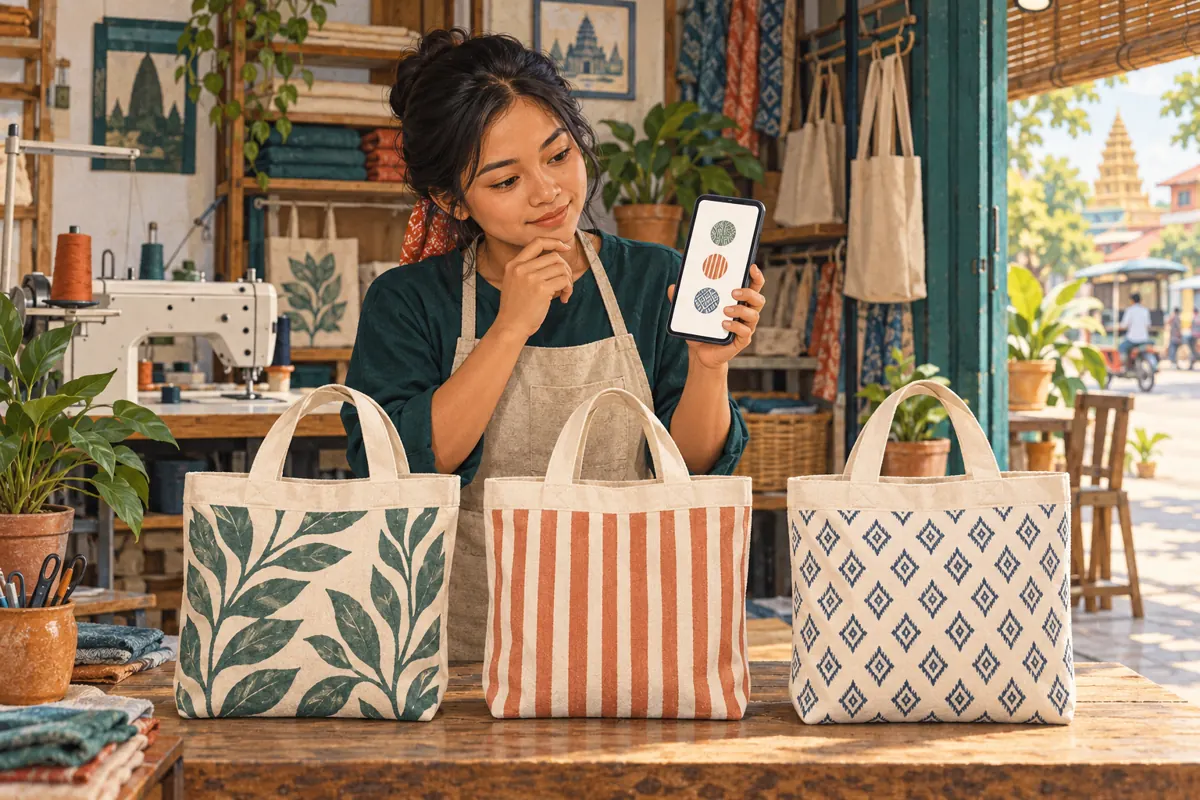
A tote-bag shop can ask customers which print they prefer and still learn surprisingly little. One sample may have better lighting, the question may imply a purchase commitment, or staff may announce a favourite while voting continues. A useful poll starts with a fair comparison and a clear decision. This guide follows a hypothetical Cambodian tote-bag workshop choosing a print for its next sample. It explains how hiding Telegram poll results until closing can support that process, how to invite participation without steering answers, and why an SMM panel delivery record cannot establish customer demand.
1. Decide what the vote will change
In this hypothetical example, a Phnom Penh workshop has leaf, stripe and diamond fabrics available. The owner can make one demonstration bag before deciding whether to offer a larger run. The poll should therefore answer which print deserves that next sample. It should not ask vaguely which bag customers like best while quietly treating the result as a production forecast. Write the intended decision in the staff brief before preparing the post.
Keep the commitment proportionate to the evidence. Choosing a prototype is a manageable response to an informal preference poll. Buying a large fabric shipment requires additional checks on cost, supply, construction and actual purchasing interest. Tell participants what their answer will influence: the next demonstration sample, subject to material availability. That makes the invitation meaningful without promising that every preferred design will become a stocked product.
2. Understand what hidden results can help with
Telegram’s official March 2026 update documents an option to hide poll results until the time runs out, alongside time limits and shuffled answer options. These are useful controls for a design comparison. The practical rationale is to let participants choose without watching a displayed leader. That rationale is an editorial recommendation, not a claim that Telegram guarantees unbiased research. See the official update linked in the sources.
Hidden totals cannot remove every influence. Participants may discuss favourites elsewhere, know the owner’s preference or simply choose the sample with the clearest photograph. The people who respond also select themselves; they do not represent every Cambodian shopper. Use this method to collect a bounded set of preferences. Do not describe the outcome as a scientific market study, even when the interface presents the results neatly.
3. Make the samples genuinely comparable
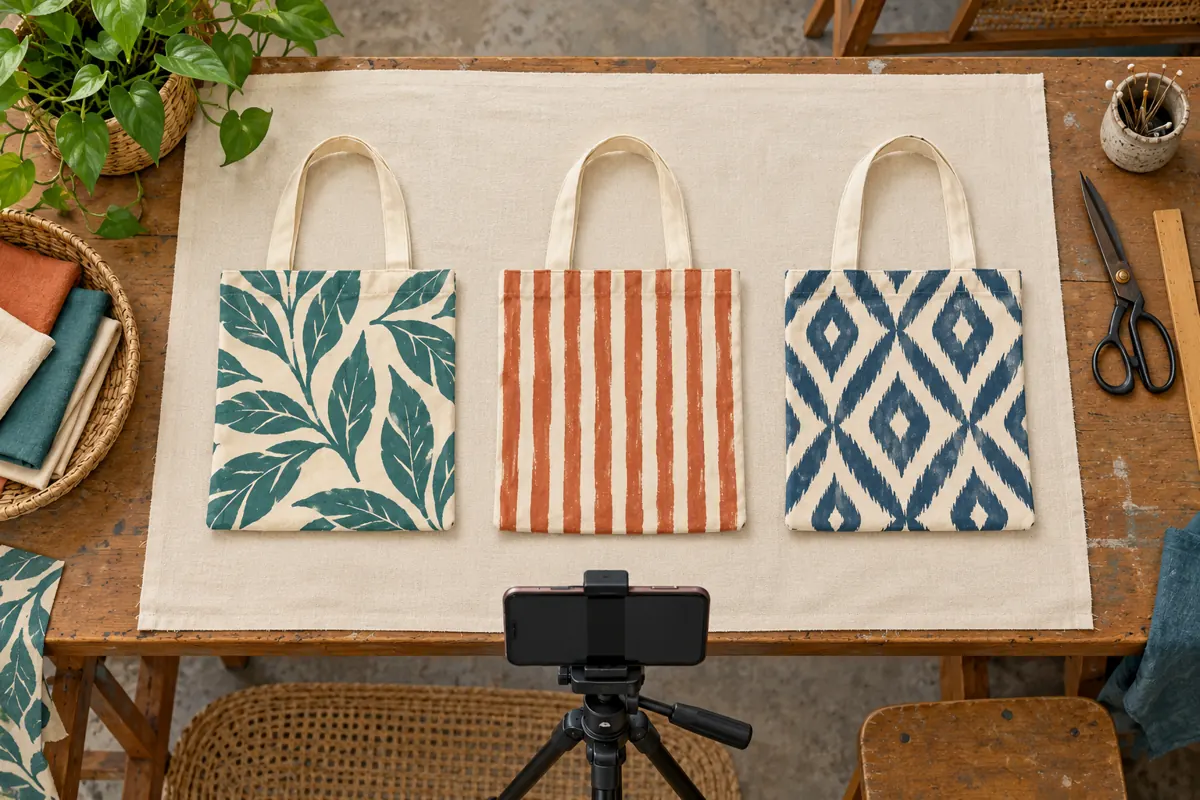
Photograph the same bag shape, handle length and fabric area for each option. Use one background, similar framing and consistent light. If one photograph shows a finished bag and another shows a folded swatch, explain that difference or reshoot. Otherwise participants may be choosing the presentation rather than the print. Check the images on an ordinary phone before publishing; a pattern visible on a large monitor may disappear at message size.
Give each design a stable descriptive name, such as Leaf, Stripe or Diamond, and repeat it wherever the sample appears. Avoid references such as the first picture or the one on the right, especially if you enable shuffled choices. In the shop’s Khmer customer copy, have a fluent reader check that the names remain distinct. Describe physical samples honestly, including whether the photographed material is the fabric intended for production.
4. Ask one question with an honest escape route
A suitable hypothetical question is: Which print should we use for our next everyday tote demonstration sample? The answer options can be Leaf, Stripe, Diamond and None of these. This asks for one useful preference without implying an order. Avoid combining print, bag size and delivery location in the same question. If those details matter, investigate them separately after deciding which uncertainty needs attention first.
Add a short explanation beside the poll: the bag shape will stay the same, voting does not reserve an item, and the shop will review fabric availability before making the sample. Include a clearly stated closing date and Cambodia time. Offer a separate route for questions about the designs. Someone who cannot see the pattern clearly needs clarification, not pressure to select whichever answer seems closest.
5. Configure and test the poll before inviting customers
Create a regular preference poll, choose a single-answer format for this decision, and review the available settings in your Telegram app. Set the voting window and enable hiding results until closing. Telegram also documents shuffling options; consider it when every option has a self-contained name. Keep the setup simple enough that another staff member can explain it without referring to an internal technical guide.
Use a separate staff test poll to check the participant experience before publishing the customer version. Confirm that the question, sample references and closing information agree. Check anonymity separately: hiding totals and concealing voter identities are different decisions. If your app does not expose the intended setting, do not promise hidden results. Update through an official distribution channel, check again, or choose another feedback method and describe it accurately.
6. Invite participation without campaigning for a design
Prepare one neutral invitation that staff can reuse. For example: Help us choose the print for our next sample; review all the designs and select your preference before the stated closing time. Share it through the shop’s existing customer touchpoints where such invitations are welcome. A counter conversation, an established channel post and a relevant social update can explain the purpose without making participation feel like a purchase obligation.
Avoid giving one design extra promotional treatment during the voting window. Posting a beautiful close-up of Leaf while leaving the other options unexplained changes what participants have seen. If a clarification is needed, provide equivalent information for all designs. Do not publish a running favourite, ask friends to rescue a losing option or offer a reward for choosing a particular answer. Those actions undermine the reason for hiding the totals.
7. Keep SMM panel services outside the preference evidence
The supplied catalogue includes the exact public service name Telegram - Post Views - [ LAST 5 POST ]. Its description is empty. The title identifies a post-view offering, but the supplied information does not establish detailed eligibility, audience origin or delivery behaviour. It provides no basis for treating the service as poll participation, Cambodian customer research or advertising delivered through an official Telegram campaign.
For this workflow, avoid purchasing activity on the research post. Purchased engagement is not evidence of genuine interest, sales, ad delivery or Cambodian users. If the business separately uses a panel service on promotional content, record that activity independently and do not combine its delivery totals with preference findings. Where documentation is missing, ask for clarification before any purchase. A catalogue title alone cannot answer how a poll or its surrounding messages would be affected.

8. Review the result alongside its limitations
After closing, record the exact question, answer labels, voting window, displayed results and places where the invitation was shared. Note any problem that could affect interpretation, such as an unclear photograph or an unusually late reminder. Keep this record short enough to use later. Its purpose is to preserve the circumstances of the decision, rather than turn a small shop’s design exercise into an elaborate reporting project.
Suppose, hypothetically, Leaf receives the most selections. A defensible conclusion is that Leaf led among respondents to this particular poll. It does not follow that most Cambodian buyers prefer it or that stock will sell. If preferences are close, review production practicality or seek focused explanations before choosing. If None of these attracts attention, investigate what is missing. Do not remove that answer from the report because it complicates the promotion.
9. Turn the preference into a sample, then a separate offer
Before cutting fabric, confirm that the selected print is available in the intended material and inspect its repeat, orientation and appearance across seams. Make the demonstration bag and review the handles, stitching and usable space. This production check matters because a pattern that looks appealing as a flat swatch may behave differently on a finished tote. The poll selects a direction; the sample tests whether that direction works.
Publish a follow-up that explains the next step without exaggerating the result. In the hypothetical workshop, that could mean showing the Leaf prototype and acknowledging the participants who helped choose it. If the shop later accepts orders, issue a separate offer with confirmed specifications, price, availability and collection or delivery terms. Ask interested people to follow the shop’s actual ordering process. A vote never substitutes for an agreed order.
10. Resolve mistakes without rewriting the outcome
If an option names the wrong fabric or the sample image materially misrepresents it, stop and explain the problem. Depending on the error, a replacement poll may be more interpretable than continuing under a correction that some voters never see. Identify the replacement clearly and keep the earlier record for internal context. Do not quietly rename an option after people have expressed a preference for something else.
Plan your response to low participation before launch. A limited response may justify a cautious prototype or a few customer conversations; it does not justify buying votes or calling the result representative. Likewise, do not extend the process merely because the owner’s preferred print is behind. Review whether the invitation was understandable, whether the choices were relevant and whether the decision genuinely needed a poll. Those lessons improve the next campaign more than an impressive-looking total.
Frequently asked questions
Does hiding results make the poll anonymous?
Do not assume so. Result visibility concerns when totals can be seen; anonymity concerns whether choices identify voters. Review both settings and test the participant experience. Explain privacy accurately before inviting responses, especially in a group where customers may know one another.
Should the shop hide results for every customer poll?
No. Use it when seeing an emerging leader could distract from the independent preference you want to collect. Some community activities deliberately involve open discussion and visible coordination. Choose the format according to the decision, and tell participants how their responses will be used.
Can we order fabric according to the percentage choosing each print?
A preference share is not a purchasing forecast. Respondents have not necessarily considered the final price, bag construction or delivery terms. Use the findings to choose what to investigate or demonstrate next. Base production quantities on additional evidence, available funds and actual ordering commitments.
What if customers ask for another print during voting?
Record the request separately and check whether it reveals a serious gap in the original choices. Avoid casually expanding a comparison halfway through, because later options receive different exposure. You can run a subsequent comparison with revised samples and clearly explain why the question changed.
Can post views tell us how many potential buyers ignored the poll?
No. A displayed view total does not establish a count of qualified buyers who understood the question and consciously declined to answer. Purchased views make that interpretation still less defensible. Report responses and any known promotion activity separately, without inventing a customer conversion rate.
Explore the current service catalogue, create an account, or ask a specific question through support tickets.
- Telegram: AI Editor, Mighty Polls, Live Photos, Bots Managed by Bots, and More
- Telegram: Polls and quizzes
- Telegram: Polls 2.0 — Visible Votes, Multiple Answers, and Quiz Mode
Prepared with AI assistance. Illustrations explain the workflow and do not represent customer results.