
22/10/2026 03:34
Selling Your Own Moulds? TikTok Commercial Disclosure for Cambodian Craft Suppliers
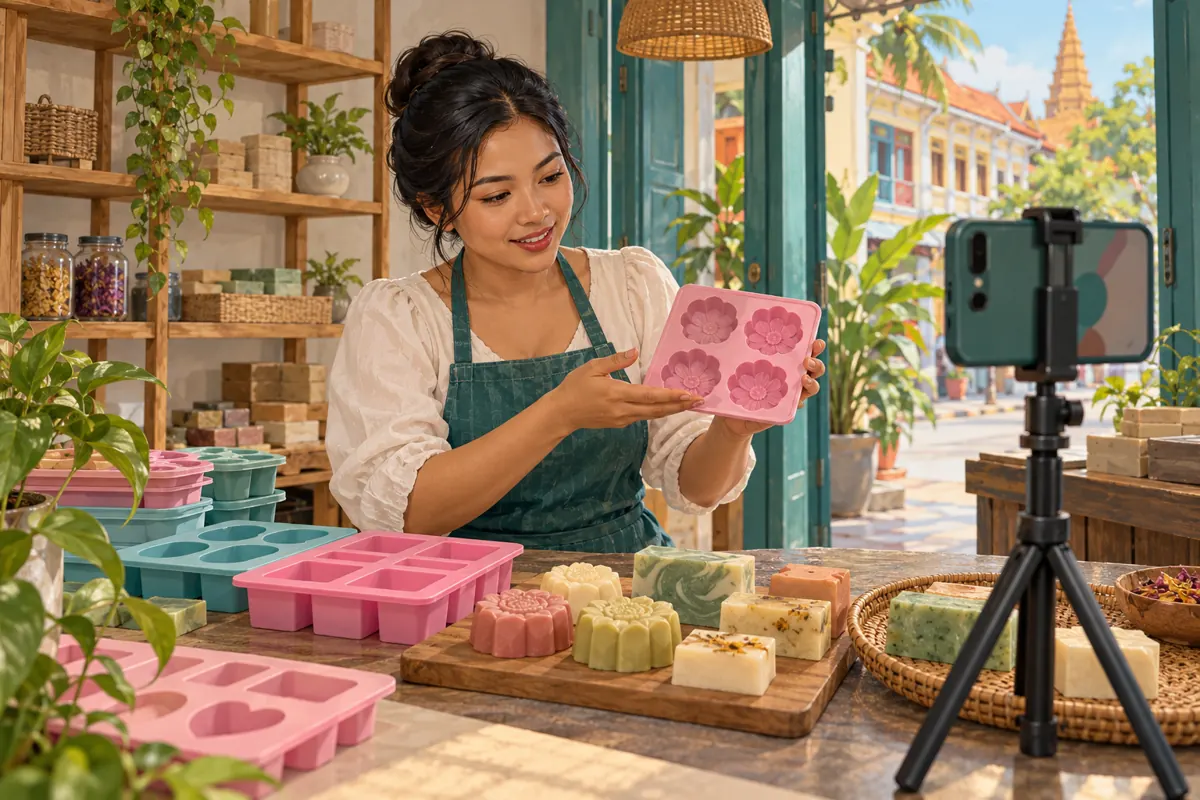
A useful soap-mould demonstration can also be a sales message. Showing how a flower shape releases from silicone, explaining which sizes your shop stocks, and inviting viewers to enquire all help promote a business. For Cambodian craft suppliers, the practical challenge is to identify that commercial purpose before uploading, while keeping the demonstration clear and useful. This guide follows a hypothetical Phnom Penh shop that sells empty soap moulds and occasionally works with independent creators. It explains how to classify each video, prepare its disclosure, review the offer and assess an SMM service listing without confusing purchased engagement with customer demand. All business scenarios below are illustrative, not reports of actual customers or campaign results.
1. Identify the commercial purpose before editing
Start with a sentence that describes why the video exists. For the hypothetical shop, that might be: “Show beginner soap makers how this mould releases a detailed shape and invite questions about available sizes.” That purpose combines teaching with selling. Calling the clip a tutorial does not remove the sales purpose, and filming casually at a workbench does not make it an independent product review.
TikTok requires its content disclosure setting when promoting a brand, product or service, including your own business. Its guidance distinguishes Promotional content for your business from Paid partnership for third-party branded content. Use the official guidance listed in the sources to check the applicable category.
Write the purpose beside the draft filename. This gives the editor and uploader the same starting point, especially when one person films in Khmer and another prepares the caption. Resolve uncertainty about the commercial relationship before spending time polishing the final cut.
2. Classify the relationship behind each upload
For an owner-led demonstration, record that the shop sells the featured mould and controls the message. A simple internal note can identify the publishing account, the business being promoted and the person approving the offer. Avoid choosing a category merely because the video looks like other creators’ tutorials.
For a creator collaboration, record what the creator receives and what the shop expects. In a hypothetical arrangement, a supplier provides a mould set in exchange for a demonstration. TikTok’s guidance includes third-party promotion in exchange for payment or other incentives, so a free product should not disappear from the relationship review simply because no cash changes hands.
If the arrangement is unclear, ask the business contact to confirm it in writing before the creator posts. Describe the actual agreement rather than relying on vague terms such as “support,” “collaboration” or “friendly feature.” Keep commercial classification separate from whether the creator liked the product.
3. Make the demonstration explain exactly what is sold
Disclosure tells viewers about the commercial context; the video still needs to explain the offer. Place the empty mould and finished sample soaps in visibly separate areas. Show the mould from above and from the side, then show the release step. End with the actual item a buyer would receive. A beautiful tray of finished soaps can otherwise make a mould listing look like a gift-set offer.
For this hypothetical shop, a clear spoken explanation would identify the empty mould as the sale item and the soaps as demonstration samples. Add confirmed dimensions and explain whether the quoted unit is one mould or a set. If accessories appear on the table, say which are included.
Avoid extending a successful demonstration into an unsupported promise. One clean release does not establish a product’s lifetime, suitability for every material or certification for another use. Keep the claims within the information your shop can substantiate.
4. Prepare a compact disclosure and offer brief
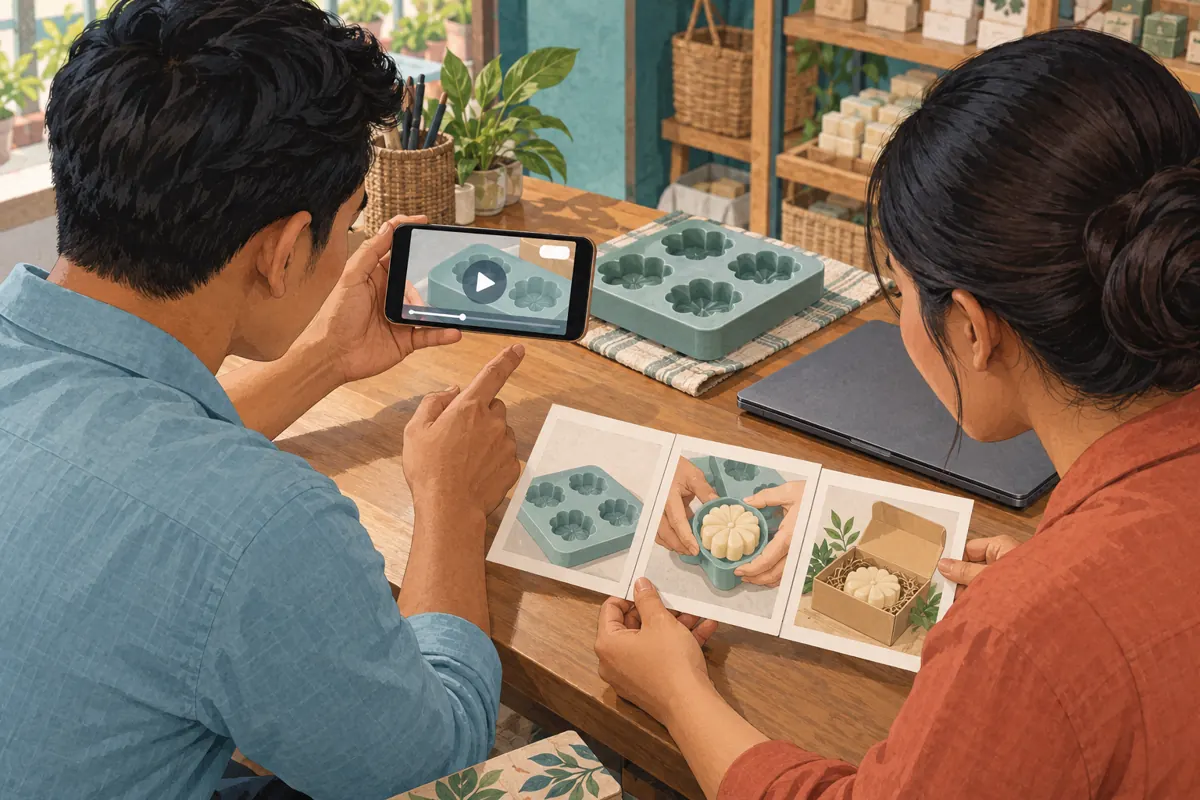
Give the uploader a short brief containing the publishing account, commercial relationship, featured item, approved offer, final video version and intended next action. Add a plain-language explanation of why the chosen disclosure category fits. The brief should be understandable without opening a long message history or guessing who supplied the product.
For a Cambodian audience, prepare the sales explanation in the language customers understand. A Khmer voiceover and Khmer caption may be appropriate even when staff use English interface labels during upload. Preserve the same meaning across both: mould versus finished soap, individual item versus set, and available stock versus a future shipment.
Have a colleague read the caption without seeing the filming notes. Ask them to describe what they believe is being sold and who is selling it. If their answer differs from the offer brief, revise the content before publication. This checks comprehension rather than simply checking spelling.
5. Apply the disclosure during the upload review
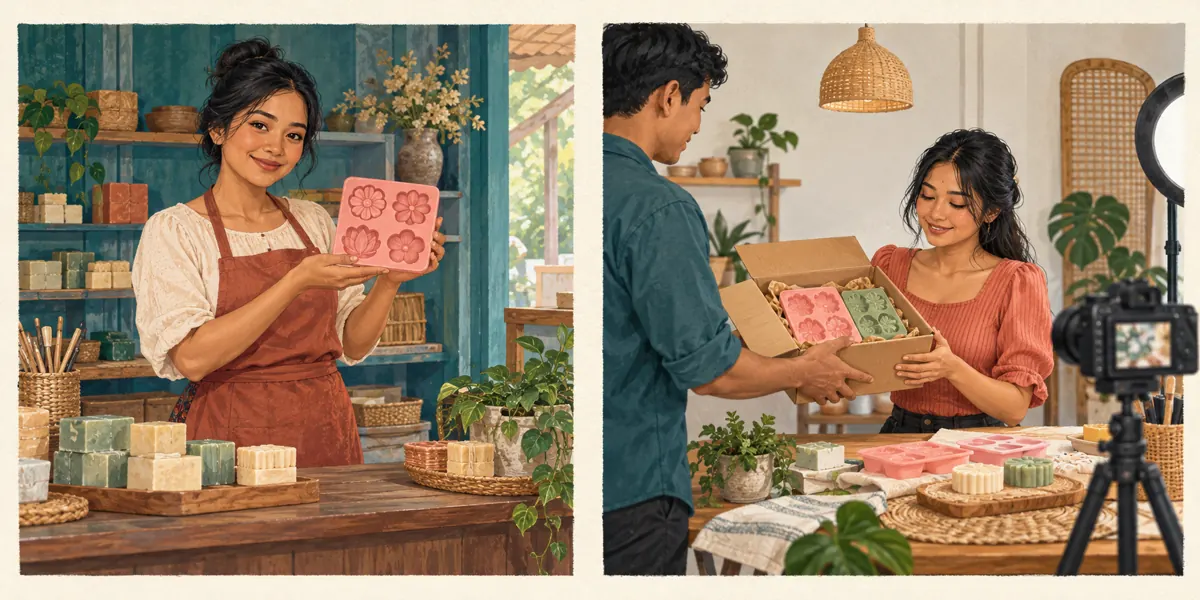
TikTok’s instructions direct uploaders to Content disclosure and ads on the post screen, sometimes through More options. Turn on Disclose commercial content, choose Your brand or Branded content as applicable, and save the selection. Follow the current interface and official instructions if the screen differs.
Make this a deliberate review step after selecting the correct video. The uploader should compare the account name, product shown, caption and relationship brief together. A technically correct setting attached to the wrong draft still leaves the team with an incorrect post.
Do not treat brand-partner tagging as a decorative credit. TikTok explains that it can involve access to post insights and advertising authorization. Review those permissions against the creator agreement before granting them. Naming a supplier in ordinary copy and authorizing use of a creator’s content are different decisions, with different practical consequences.
6. Check the published result and handle corrections
After publication, review the post as a viewer would. Confirm that the video opens, the disclosure appears, the caption identifies the product correctly and the enquiry instruction points to a contact the team monitors. Save the final post reference with the approved brief so later work starts from the published version.
TikTok says disclosure can be enabled after posting, but a published disclosure label cannot be changed; correcting the wrong selection may require removing and recreating the post. Check the current help instructions before acting.
If replacement is necessary, first list where the old reference has been shared. Update the team’s campaign notes and any prepared promotional materials to the new destination. If an external service request already references the old post, contact its provider about the actual options. Do not assume that a request can be transferred, cancelled or refunded.
7. Read SMM listings as claims requiring review
One relevant public listing in the supplied catalogue is “TikTok - Likes/Views/Comments 🇰🇭 [ Package 500-800 ] Start time: 1-3h”. Its title names engagement types and a package range. The supplied Khmer description says a notification and confirmation step is involved, with a stated notification window of one to twelve hours. That differs from the timing in the title and deserves clarification, not an invented explanation.
Neither the flag nor those instructions establish Cambodian audience origin, genuine buyers, official TikTok affiliation or advertising delivery. They also do not establish what permissions a confirmation would grant. A listing is insufficient evidence for those conclusions.
TikTok’s Community Guidelines prohibit services that artificially boost engagement or manipulate its recommendation system. Evaluate the proposed mechanism against those rules before spending. If a provider cannot explain the mechanism clearly, decline the purchase. Purchased engagement does not demonstrate genuine interest, sales or Cambodian users, and it cannot substitute for commercial disclosure.

8. Separate disclosure, advertising and business results
Treat these as separate records. The disclosure record explains the relationship behind the post. An advertising record, if applicable, documents an actual authorized advertising campaign. The business record contains enquiries, quotations and completed orders. A service completion notice belongs with the service record; it does not prove that advertising ran or that anyone wanted a mould.
For the hypothetical shop, a useful enquiry note might say that a person asked whether the flower cavities match their preferred soap size. Record the answer and any next step. Do not label the person a confirmed customer until the shop’s normal order process supports that conclusion.
Review questions for content improvements. Repeated confusion about whether soaps are included suggests the demonstration or caption needs clarification. That finding is useful without claiming a conversion lift. Where someone’s location matters for delivery, obtain it through the enquiry process rather than inferring it from likes or a catalogue flag.
9. Avoid shortcuts that weaken an otherwise useful post
One common mistake is treating a friendly teaching style as evidence that a post is noncommercial. Another is allowing the uploader to guess the creator relationship at the final screen. Both are easier to prevent when the brief states the purpose and arrangement before editing begins.
A second group of mistakes concerns the offer itself: showing a completed soap set while selling only the mould, leaving an outdated pickup promise in the caption, or using a creator’s enthusiasm as evidence of product durability. Correct the specific ambiguity instead of adding a long disclaimer that viewers may never read.
Finally, avoid presenting paid reactions or comments as independent customer approval. Keep requests for feedback open and answer genuine questions directly. If a supplier offers engagement without explaining its origin or method, a larger package does not resolve that uncertainty. Pause the spending decision and return to the information you can verify.
10. Give the team a simple release decision
Use three outcomes for the final review: ready, revise or hold. Mark a post ready when the relationship is understood, the disclosure selection matches it, the offer is clear and the enquiry route works. Mark it revise when the creative needs a specific correction, such as separating sample soaps from the sale item.
Use hold when a material fact is missing: the creator arrangement is unresolved, the stock promise has not been confirmed, or a proposed external service cannot explain what it does. Assign a person to resolve the missing fact rather than leaving the draft in an indefinite shared queue.
For a small Cambodian shop, this decision can fit in one message beside the final video reference. The value comes from making the reason visible. A clear release decision helps the next colleague know whether to upload, edit or investigate, without mistaking a finished video file for an approved campaign.
Frequently asked questions
Does a helpful tutorial need commercial review if it never states a price?
Yes. Look at its purpose and relationship to the seller. A tutorial that demonstrates your stock and invites enquiries still promotes the business. In the hypothetical mould shop, removing the price would not change who benefits from the sales message. Classify the post before deciding how much offer detail belongs in the caption.
Can we put all the explanation in the caption?
Use the caption to support the demonstration, but resolve the central product distinction on screen or in speech as well. Someone watching the release step should understand that the mould is the item for sale. The commercial setting, product explanation and detailed offer each serve a different purpose.
What should a creator confirm before accepting a free mould?
Confirm whether posting is expected, who approves factual claims, what the creator may say independently and whether the business wants permission to reuse the content. Record the arrangement before filming. Clear expectations help both parties assess the disclosure and avoid discovering a disagreement when the finished video is ready.
Does the Cambodia flag in a service name prove local buyer interest?
No. A flag is part of the listing, not evidence about individual viewers, their location or their intention to purchase. Ask what the provider actually supplies and how it complies with platform rules. Evaluate Cambodian demand through relevant enquiries and confirmed business records, without presenting purchased engagement as customer approval.
What is the most useful first review after posting?
Check whether viewers understand the offer. Read genuine questions for confusion about size, contents and delivery, then verify that staff can answer consistently. Keep a short correction list for the next demonstration. This produces practical improvements even when the post has too little reliable evidence to support broader performance conclusions.
Explore the current service catalogue, create an account, or ask a specific question through support tickets.
- TikTok Help Center: Promoting a brand, product, or service
- TikTok Business Help Centre: How to turn on the Commercial Content Disclosure setting in TikTok
- TikTok Community Guidelines
Prepared with AI assistance. Illustrations explain the workflow and do not represent customer results.