
22/10/2026 08:45
Which Drawer Sticks? TikTok Video Replies for Cambodian Cabinet-Repair Shops

A short cabinet demonstration can leave viewers with a practical question: which part should they photograph when their own drawer sticks? For a Cambodian cabinet-repair shop, answering that question clearly can make the next enquiry easier to handle. A video reply offers room to show the whole cabinet, identify the relevant area and explain what information the workshop needs. The aim is a better conversation, with realistic expectations about inspection and booking. This workflow helps shops select genuine questions, film useful answers and assess SMM-panel listings without confusing engagement counts with repair demand.
1. Start with a question that needs a picture
Consider a hypothetical Phnom Penh workshop that posts a demonstration of a drawer opening smoothly. A viewer asks, “Mine stops halfway. Which part do you need to see?” A useful response would show suitable photo angles. It would avoid announcing that the viewer needs replacement runners, because the comment alone does not establish the cause.
Choose a question whose answer becomes clearer when viewers can see an object, movement or comparison. “Where is the drawer slide?” is a strong candidate. “Are you open tomorrow?” usually needs a short written answer. Before filming, finish this sentence: after watching, the viewer should know how to do one specific thing. For this example, that thing is preparing useful enquiry photos.
2. Decide between video, text and a private conversation
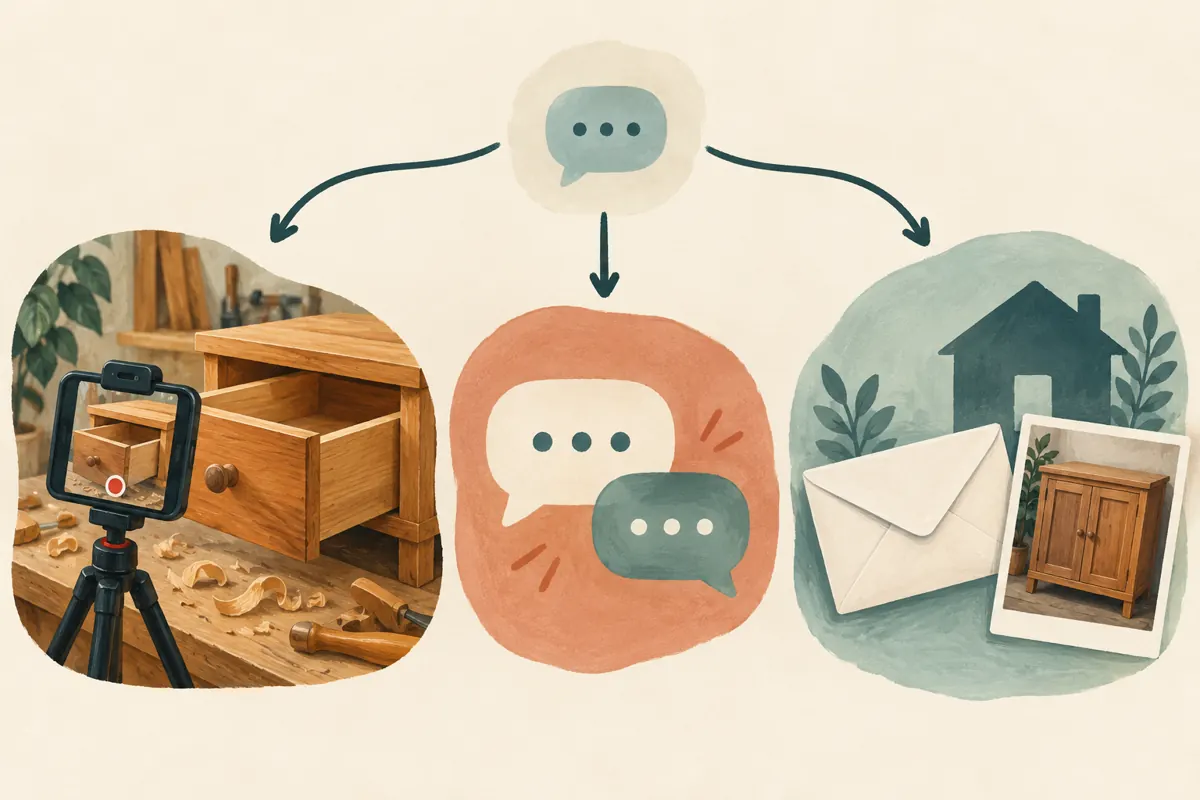
Use three routes when reviewing comments. Choose a public video for a broadly useful visual explanation. Choose text for a simple fact that is easy to keep accurate. Move the conversation to your stated private contact channel when it involves an address, personal circumstances, a disputed repair or an individual quotation. This decision keeps public content useful without exposing unnecessary details.
A question about whether the shop handles wooden cabinets can receive a direct answer. A question containing a home address should not become the featured comment in a promotional video. If the underlying topic is useful, create a separate demonstration with a general introduction. Obtain permission before reusing customer photographs, and keep permission for promotional use separate from permission to inspect a repair enquiry.
3. Use TikTok’s reply feature deliberately
TikTok’s official tutorial describes selecting a comment on your video, tapping the camera icon beside the comment field and recording a response. The comment can appear as a sticker, and the published response also becomes a new video on your profile. Check the controls available in your app before planning the recording. [TikTok’s video-reply tutorial](https://newsroom.tiktok.com/product-tutorial-reply-to-comments-with-video?lang=en).
Because someone may encounter the response independently, give it a complete opening. Say which object you are discussing and what the demonstration explains. An opening such as “Here are the photos our workshop needs for a sticking drawer enquiry” works without the earlier clip. If the reply control is unavailable, publish a standalone explanation rather than fabricating a comment or presenting a staged question as customer feedback.
4. Prepare a demonstration cabinet and a narrow script
Use a workshop sample that you can film freely. Clear paperwork, addresses and personal belongings from the background. Select a cabinet that illustrates the enquiry clearly, and identify it as an example when its construction may differ from viewers’ furniture. Decide whether you are explaining a visible part, requesting a photo or describing the inspection process; combining all three can make the response hard to follow.
For the hypothetical drawer question, write three sentences before recording. First: show us the whole cabinet so we can understand its arrangement. Second: if accessible without forcing anything, photograph the drawer side and visible hardware. Third: send the pictures privately with a description of when the drawer stops. These are information requests, not instructions to dismantle furniture or a promise that photographs will establish the fault.
5. Film the whole object before the close-up
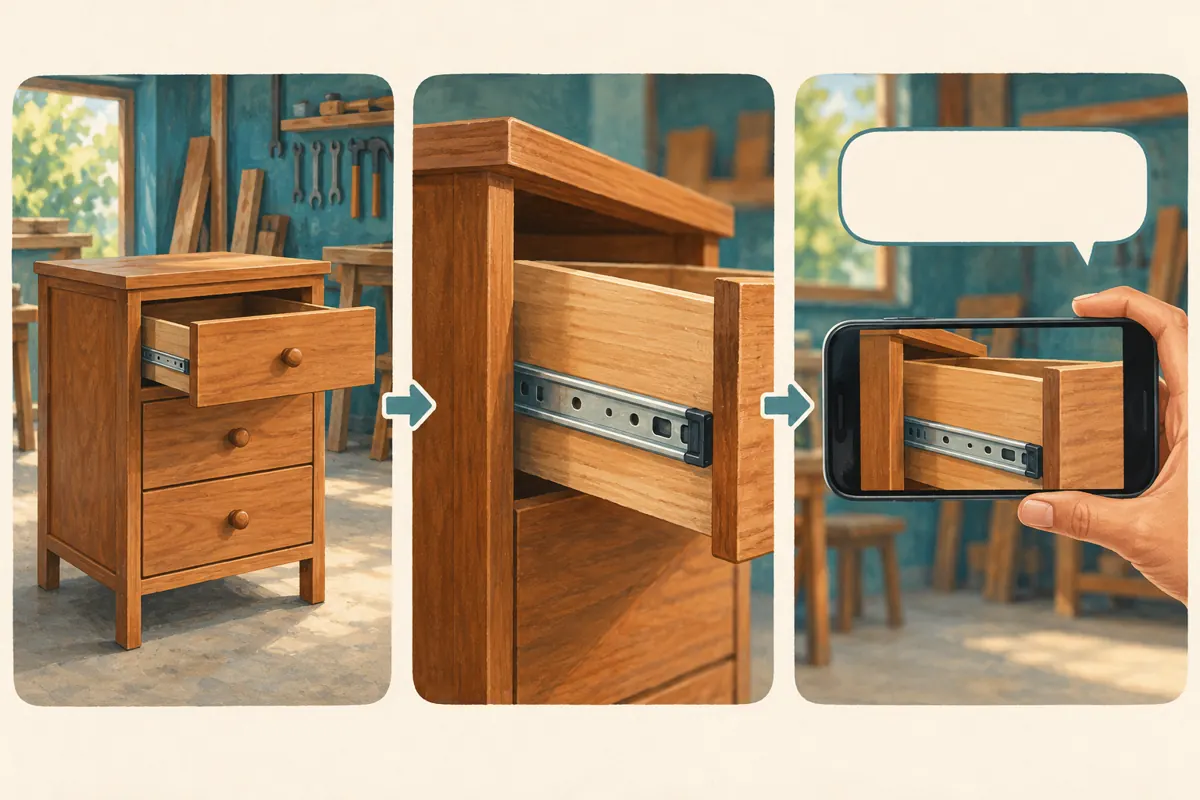
Begin with a steady view showing which drawer you mean. Move to the relevant side or hardware only after viewers have that orientation. Keep the camera angle consistent enough that the close-up feels connected to the first shot. Avoid covering the important edge with your hand. A colleague can watch the draft and point to the area they think customers should photograph.
Leave clear space for the comment sticker and any short caption. Watch the preview on a phone: the drawer slide should remain visible when overlays appear. Record speech in the language your intended customers understand, and review any added captions for part names and meaning. If you cannot show the relevant area clearly on the sample, explain the limitation instead of filling the gap with an unrelated close-up.
6. Explain what the demonstration cannot establish
A repair video can show where to look without determining why a particular drawer sticks. Describe what is visible in your sample and avoid extending the conclusion to every cabinet. “This example has a metal slide along the side” is a bounded observation. “Every sticking drawer needs this replacement” turns the demonstration into an unsupported diagnosis and can create an expectation the workshop cannot meet.
Make the next step equally precise. Request an overall photo, a useful detail photo and a plain description of the symptom. Tell viewers not to force a jammed drawer merely to reproduce your camera angle. If access is difficult, ask for whatever can be photographed safely and explain that an inspection may be necessary. The quality of the enquiry matters more than matching the sample perfectly.
7. Connect the answer to the shop’s actual service
After answering the question, explain what the business can do next. State the service area you genuinely cover and whether customers should enquire before bringing furniture to the workshop. A Cambodian shop handling only local visits should not use wording that implies nationwide collection. Keep changing details, such as appointment availability, in a response that staff can verify when the enquiry arrives.
A reply promoting your repair service is still commercial content. TikTok says its content disclosure setting is required when promoting a brand, product or service, including your own business. Check that setting during the publishing review. [TikTok’s commercial-content guidance](https://support.tiktok.com/en/business-and-creator/creator-and-business-accounts/promoting-a-brand-product-or-service?lang=en). End with a concrete invitation to send relevant information, while making clear that an enquiry does not reserve a visit or confirm a price.
8. Assess the panel listing before considering expenditure
The supplied catalogue includes “TikTok - Likes/Views/Comments 🇰🇭 [ Package 500-800 ] Start time: 1-3h”. Its name identifies a package involving those engagement types. The accompanying description refers to a notification and confirmation step within one to twelve hours, while the title uses a different timing label. Those statements do not establish how the package is divided, who participates or whether any interaction represents repair interest.
TikTok’s integrity rules prohibit services that artificially increase engagement. A catalogue entry does not override those rules or establish official platform affiliation. Do not buy or script comments to manufacture questions for this workflow. Purchased engagement is not evidence of genuine interest, sales, ad delivery or Cambodian users; a flag in a title does not verify audience origin. [TikTok’s integrity and authenticity rules](https://www.tiktok.com/community-guidelines/en/integrity-authenticity/).
For an SMM-panel customer, the useful decision here may be to defer the purchase. Identify the problem first: if people cannot see the part, improve the shot; if the next step is unclear, rewrite the invitation. Neither problem is solved by a larger counter. Keep any existing service records separate from the workshop’s enquiry log so staff do not interpret service delivery as evidence that the video generated customers.
9. Follow the conversation through to a clear outcome
After publishing, review whether new questions reveal a missing explanation. If viewers repeatedly ask which side to photograph, the demonstration may need a clearer orientation shot. If they understand the photo request but ask whether you visit their district, the next improvement belongs in the service information. These observations help choose the next response without assuming that every comment signals buying intent.
Record the original question, the response link and the practical issue addressed. In a separate enquiry record, note whether someone supplied enough information for staff to respond and whether an appointment was actually agreed. If a customer says the video helped, record that statement as their feedback. Do not attribute every later booking to the clip or count several messages from one person as several prospective customers.
10. Avoid turning a helpful reply into a misleading promise
Common mistakes include featuring a comment containing private details, hiding the relevant hardware behind the sticker and answering a broad repair question with one unexplained example. Another is editing out the moment that shows where the close-up belongs. Correct these problems before promoting the post. A smooth-looking video still fails its purpose if viewers cannot identify what to photograph.
Avoid using a grateful comment as proof of a repair outcome that has not been documented. Do not imply that a demonstration guarantees a repair price, completion date or replacement-part fit. If the answer later becomes inaccurate, respond with a clear correction and review where staff are still sharing it. Maintaining a small set of accurate answers is more useful than accumulating replies that contradict current workshop practice.
Frequently asked questions
Should every useful comment receive a video reply?
No. Use video when seeing the object materially improves the explanation. Opening hours, contact routes and simple availability questions are usually easier to answer in text. Individual repair quotations need enough context and often a private conversation. Selecting the right format also protects filming time for answers that customers can reuse.
What if nobody has asked the question I want to explain?
Publish a normal instructional video with an honest introduction, such as explaining which photographs your workshop needs. You do not need a customer comment to justify useful content. Avoid writing a staged comment and presenting it as spontaneous interest. Keep the same focused script and clear next step used for a genuine reply.
Can we quote a customer’s comment without showing their cabinet?
Review the comment itself before featuring it. It may contain identifying details, an address or a claim about an unresolved job. If attribution would distract from the explanation or expose private context, make a general standalone video. Permission to discuss a repair privately does not automatically settle permission to reuse its photos publicly.
How do we know whether the video improved enquiries?
Look for practical changes: customers identify the affected drawer, provide usable photos or understand that inspection comes before a firm quotation. Record these observations without inventing a success percentage. Views and likes cannot establish that improvement by themselves. Ask staff what information is still missing, then revise the explanation around that specific gap.
Does the Cambodia flag in a TikTok package prove it brings local customers?
No. The supplied title and description do not verify participant location, buying intent or repair demand. They also do not establish official TikTok affiliation. Assess platform rules before considering a service, and never treat purchased comments as genuine customer questions. For this workflow, clear demonstrations and truthful enquiry handling remain the useful foundation.
Explore the current service catalogue, create an account, or ask a specific question through support tickets.
- TikTok: Product tutorial — Reply to comments with video
- TikTok Help Center: Promoting a brand, product, or service
- TikTok Community Guidelines: Integrity and Authenticity
Prepared with AI assistance. Illustrations explain the workflow and do not represent customer results.