21/10/2026 02:17
Which Rental Terms Are Current? Telegram Pinned Messages for Cambodian Camera-Rental Shops
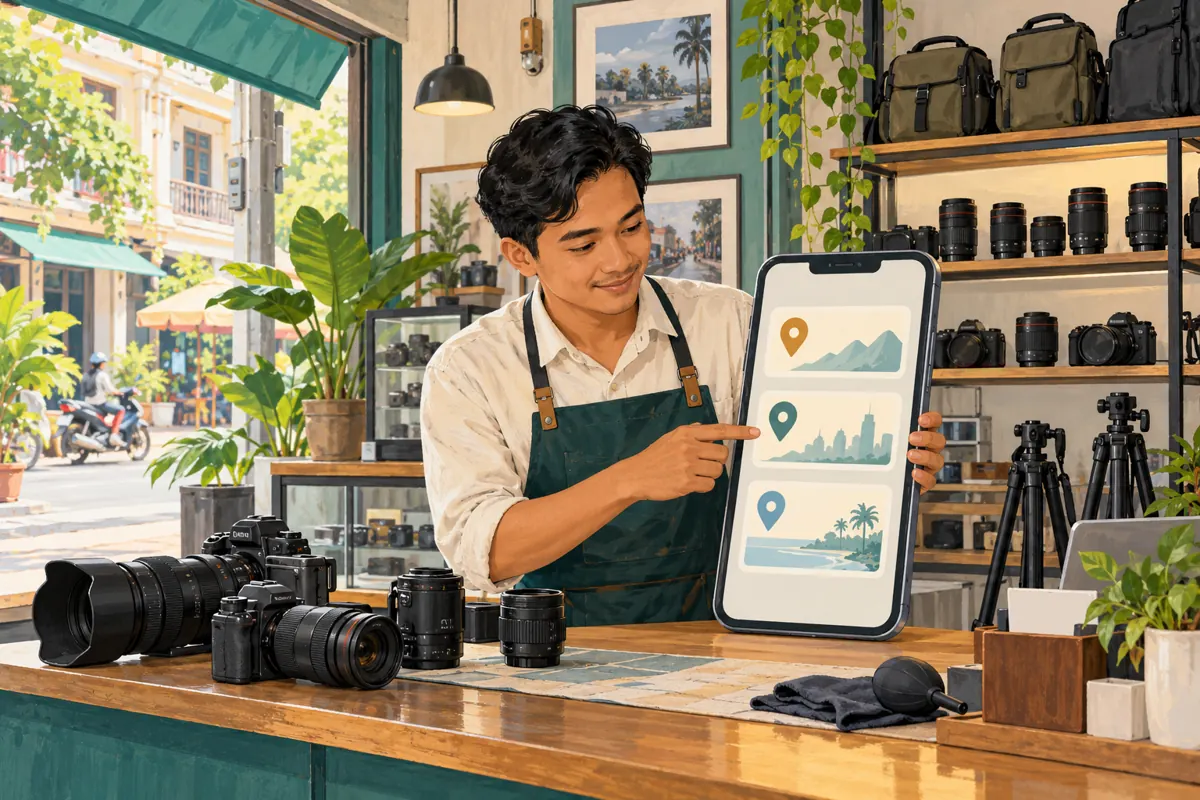
A camera demonstration can attract attention while leaving the most important rental questions unanswered. Does the kit include a lens? When must it come back? Does sending a message reserve it? For a Cambodian camera-rental shop promoting equipment through Telegram, these details should be easy to find before someone travels to collect a kit. A small, maintained set of pinned messages can provide that reference. This workflow explains how to choose the information worth pinning, replace outdated guidance, and connect promotional posts to a clear enquiry process. It also explains why an SMM panel service or a rising view count cannot establish that customers read the terms or confirmed a booking.
1. Define the question your pins must answer
Start with a specific customer task: finding the current instructions for requesting a camera rental. Avoid making the pinned area a collection of every post the shop likes. A customer arriving from a short demonstration needs to understand the equipment, the rental period, and the next step. Attractive sample footage alone cannot answer those questions.
Consider a hypothetical Phnom Penh shop renting cameras to small event crews and independent creators. Its channel contains demonstrations, accessory photos, and occasional offers. A visitor finds an older camera kit photograph and assumes everything pictured remains included. The shop needs a dependable reference that distinguishes current package information from historical promotional material. Write down that problem before deciding which messages deserve a pin.
2. Use Telegram’s pinned area as a small reference desk
Telegram’s official pinned-message announcement confirms that chats can contain multiple pinned messages, including channels. Readers can move between pins through the top bar or open a separate view of pinned messages. These features make it possible to maintain several focused references rather than one oversized announcement. They do not establish that every visitor has opened or understood them.
For this workflow, begin with three messages: equipment and inclusions, rental and return rules, and how to request a booking. Three is an editorial recommendation, not a Telegram limit. If the shop has only one simple package, combine the information into one readable guide. Add another pin only when it answers a separate recurring question that customers otherwise struggle to resolve.
3. Make equipment inclusions explicit
The equipment message should identify each kit with a stable name or internal reference customers can repeat. State the camera body, included lens, batteries, charger, and carrying bag only when those items are actually part of the package. Separate optional accessories from included items. A tripod placed beside a camera for a photograph should not silently become part of the offer.
In a hypothetical example, a shop calls a package Interview Kit A. Its reference message explains that the microphone is optional and that staff must confirm compatibility with the requested setup. The promotional demonstration uses the same kit name. This gives the customer a useful phrase to send and gives the employee something precise to check, without suggesting that the demonstration guarantees a particular production result.
4. Explain the rental period in ordinary language
Words such as daily, overnight, and weekend can leave room for different interpretations. Describe the shop’s actual collection and return arrangement, including how staff confirm the deadline. If the business charges in dollars or riel, identify the currency wherever a real price appears. Do not publish an assumed exchange rate or leave customers to infer whether an accessory has a separate charge.
Keep the public message focused on approved business rules. Explain how customers should ask about extensions, late returns, deposits, or cancellation conditions where those rules exist. Avoid inventing policies to make the guide look complete. If a detail depends on the equipment or dates, say that staff will provide it with the quote. Give the message a clear effective date so readers can distinguish it from older guidance.

5. Separate a booking request from confirmation
The booking message should tell customers what information starts a useful conversation: kit reference, proposed collection date and time, proposed return date and time, and required accessories. Ask for only the information needed at this stage. Do not encourage people to place identity documents, payment evidence, or personal contact details in public comments.
A hypothetical enquiry might read: I would like Interview Kit A for collection on Saturday morning and return on Sunday afternoon. Is a compatible microphone available? Staff would then check the equipment and explain the applicable terms. The guide should state what the shop considers a confirmed booking. Reading the guide, reacting to a post, or sending an initial enquiry should not be presented as reserving stock.
6. Publish and test the reference as a customer would
Have the person responsible for rentals approve the content before an authorized channel administrator pins it. In the Telegram app, open the intended message’s action menu and look for the pin option; menu placement can differ between clients. Check the completed pinned area instead of assuming that the action produced the intended customer experience. Keep message titles meaningful when seen without surrounding posts.
Ask a colleague to perform a short reading test on a phone: find what is included, identify the return arrangement, and explain how to request availability. Let them work without coaching. If they miss an answer, improve the wording or structure. For Cambodian customers, prepare Khmer wording when that is the language they use, and have a fluent reader verify technical terms. Keep kit references consistent across language versions.
7. Retire outdated guidance deliberately
Choose one employee to own the reference and another to cover absences. Review it whenever an inclusion, collection arrangement, contact route, or rental rule changes. A regular review is useful, but a known operational change should trigger an immediate check. Record the effective date and the reason for the change in an internal editorial note.
When a replacement message is needed, publish and check the new guidance, pin it, and remove the obsolete message from the pinned set. Where practical, label the old post as superseded and point readers to the current guide. Do not assume that unpinning makes historical content disappear or that a correction updates screenshots. For an existing booking, communicate relevant changes directly and preserve the terms actually agreed with that customer.
8. Connect promotions to the right reference
Give each promotional post one relevant next step. A lens demonstration should identify its kit and direct readers to the equipment guide. A holiday rental announcement should direct them to the applicable rental arrangements. Avoid ending every post with a vague instruction to read everything pinned. The connection should help someone resolve the question raised by that particular photograph or video.
Before distributing a promotion, check that its description agrees with the current reference. If a microphone appears in a demonstration but costs extra, disclose that distinction in the promotional copy itself. Do not hide a material exclusion inside a separate guide. Pinning supports clear promotion, but it cannot repair an inaccurate headline or make unavailable equipment available. Review the offer and the reference together.

9. Evaluate a panel listing without confusing it with navigation
The supplied catalogue includes the exact public service name Telegram - Post Views - [ LAST 5 POST ]. It appears in the category Telegram views - [Bot Account Old posts], and its description is empty. That is insufficient information to establish how posts are selected, what delivery conditions apply, or whether a particular pinned guide would be included. Do not assume that pinned placement means recent-post eligibility.
If evaluating this listing, request clarification about the target requirements and selection method before making a decision. Its title does not establish Cambodian audience origin, genuine readership, bookings, or official Telegram affiliation. Purchased engagement is not evidence of genuine interest, sales, ad delivery, or Cambodian users. Keep any panel delivery record separate from the shop’s customer enquiries. If the problem is that people cannot locate the terms, improving the pinned reference is the directly relevant task.
10. Review understanding through actual enquiries
Telegram’s Channels FAQ explains that post view counts are approximate and include views of forwarded copies. A view total therefore cannot serve as a register of customers who accepted rental terms. Treat it as a limited platform signal. The more useful operational question is whether the messages customers send contain enough information for staff to answer accurately.
Keep a modest log of recurring confusion without copying unnecessary personal details. Record questions such as whether a lens is included, whether Sunday return is possible, or whether an enquiry holds a camera. Review those questions alongside the guide. In a hypothetical review, repeated microphone questions might reveal an unclear equipment photograph rather than a need for more exposure. Revise the relevant sentence, then observe whether later enquiries become clearer without claiming that the edit caused every change.
11. Avoid the mistakes that weaken a pinned guide
Pinning every promotion makes the reference harder to scan. Leaving two conflicting policy messages pinned makes the customer choose which one to believe. Using only a graphic can make small details difficult to read on a phone. Keep the essential explanation in readable message text, and use photographs to clarify equipment rather than carry every condition.
Another mistake is treating a pinned post as proof that a customer agreed to everything inside it. Staff should still confirm the relevant equipment, dates, and terms during the actual booking conversation. Finally, avoid silently rewriting a guide and expecting existing customers to notice. A useful pinned reference supports a reliable conversation; its success depends on staff maintaining accurate information and handling exceptions explicitly.

Frequently asked questions
Should the rental shop pin its most popular demonstration?
Only if it performs a continuing reference function. A popular demonstration may show equipment well while omitting current inclusions or collection arrangements. Keep the practical guide easy to find, and use the demonstration as supporting material when it answers a specific question. Popularity alone is not a useful reason to retain a pin indefinitely.
Should every availability change create a new pinned message?
Usually, keep the pinned guide focused on how customers check availability. Equipment can be reserved, returned, inspected, or temporarily unavailable between updates. If the shop publishes an availability snapshot, give it a clear date and explain that staff must confirm the requested period. Do not let a static pinned photograph imply live stock.
What should staff do when a customer sends an old screenshot?
Identify which information differs and explain the current offer plainly. Ask whether the customer already has a confirmed booking before treating the screenshot as a new enquiry. Check the actual booking record where one exists. Update the public reference if it remains confusing, but do not assume that editing the channel changes an agreement already made.
Can a last-five-posts panel service be assumed to include an older pinned guide?
No. The supplied listing has no description explaining that relationship. Pinned placement and the phrase last five posts should not be treated as interchangeable. Ask for the service’s documented selection rules and target requirements. Even confirmed delivery would not show that a prospective renter understood the guide or intended to book.
How can a small shop tell whether the guide is useful without complex analytics?
Use a short reading test and review recurring enquiry questions. Check whether customers can identify a kit, describe their dates, and understand the confirmation step. Note ambiguities that require repeated staff explanations. This creates specific editing tasks while avoiding unsupported conclusions about sales, audience quality, or the effect of purchased engagement.
Explore the current service catalogue, create an account, or ask a specific question through support tickets.
- Telegram: Pinned Messages 2.0, Improved Live Locations, Playlists and More
- Telegram Channels FAQ: What does the eye icon mean?
Prepared with AI assistance. Illustrations explain the workflow and do not represent customer results.