
20/10/2026 02:33
Which Tile Collection Was That? Telegram Story Albums for Cambodian Showrooms

A shopper remembers a patterned tile from your Telegram stories but cannot describe which one. Your showroom sends several pictures, the customer replies with another colour, and the conversation starts again. A small, clearly organized story collection can make that enquiry easier. For Cambodian tile businesses, Telegram story albums offer a way to group visual material around recognizable collections instead of leaving customers to remember when something appeared. This workflow explains how to select samples, prepare useful stories, test the browsing experience and connect interest to a specific enquiry. It also explains why an SMM panel service for channel-post views should not be mistaken for promotion of a story album.
1. Decide whether an album solves your actual problem
Start with the questions your showroom receives. If customers repeatedly ask for the cream collection, decorative patterns or stone-look options, an album may provide a useful browsing route. If they mainly ask whether one particular product is available today, a current stock response may matter more. Organizing photographs cannot replace the information staff must verify before quoting.
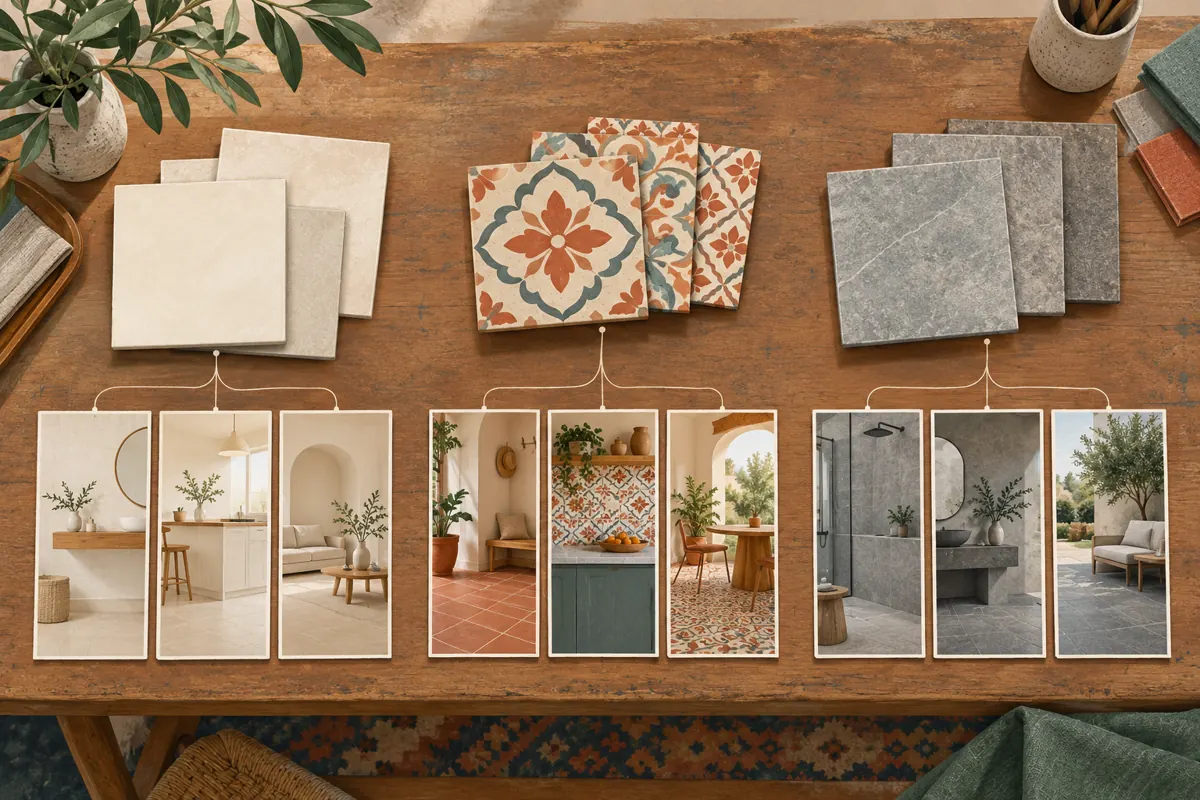
Consider a hypothetical Phnom Penh showroom whose shoppers often revisit samples after discussing them with family. It could begin with three collections: plain neutrals, decorative patterns and stone-look finishes. The purpose is to help someone return to a visual choice and identify it. Avoid organizing everything by posting month unless customers actually shop that way. Start with one collection if that is all the team can maintain accurately.
2. Check the account and story capability first
Telegram's official album announcement says stories can be grouped into albums on profiles and channels. Its documented starting point is the Posts tab, followed by Add Album. This is a story-organizing feature; it should not be confused with sending several photographs together as a channel message. See Telegram's Story Albums announcement in the sources.
Before preparing a large collection, check the intended account in the current app. Confirm that you can publish stories there and access the album controls. Telegram documents channel story posting through boosts and eligible administrators with the necessary rights and Premium subscription. Check the actual channel requirements shown in the app rather than budgeting from an assumed entitlement. If the capability is unavailable, prepare an ordinary product reference post while you resolve access; do not promise customers an album that they cannot open.
3. Give each collection a clear boundary
Write one sentence describing what belongs in each album. For example, a hypothetical decorative-pattern collection might include tiles with repeated printed motifs, while a stone-look collection contains products intended to resemble stone. These are visual categories, not technical suitability claims. A stone appearance alone does not establish that a tile is appropriate for an outdoor walkway or wet floor.
Keep names short and recognizable to the people who visit your showroom. A Cambodian business can use customer-facing Khmer names where appropriate, with a familiar product code alongside each sample. Keep that code identical in stories, staff reference sheets and quotations. Avoid naming a collection after a temporary discount or describing it as available immediately unless someone maintains that promise. Stable collection names are easier to reuse when individual products change.
4. Build a sample record before photographing
For every selected tile, prepare a small internal record containing its product code, verified dimensions, stated finish, supplier reference and the person responsible for checking availability. Separate confirmed facts from questions still awaiting an answer. If staff cannot confidently distinguish two similar samples at the counter, a customer viewing a phone is unlikely to distinguish them either.
Use those records to decide what each story must communicate. A hypothetical sample labelled P-14 could have a full-face photograph, a closer view of the pattern and a short caption identifying the code. Do not insert an unverified stock quantity or guess the material from appearance. When two products share a design but differ in size, give each a distinct reference. The browsing collection should preserve the same distinctions that matter when the showroom prepares an order.
5. Photograph for comparison, not exaggerated appearance
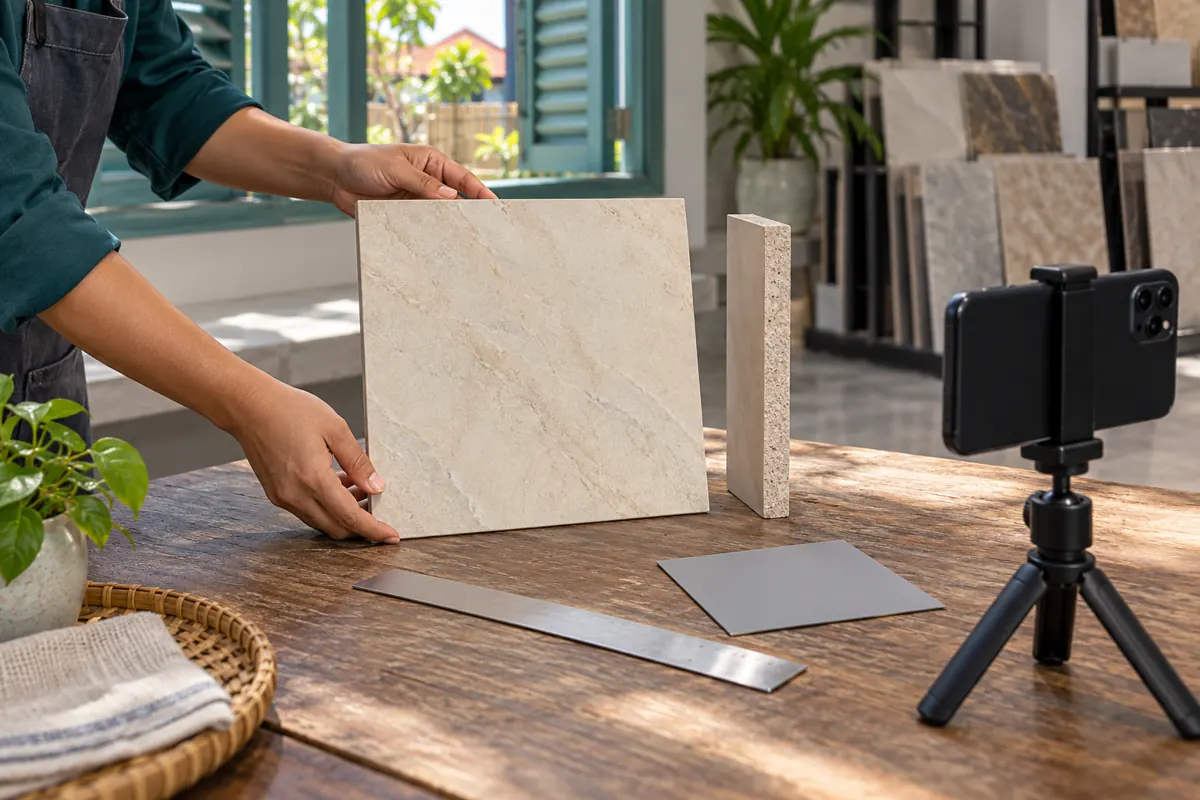
Use similar lighting, distance and background for comparable samples. Show the whole face before adding close details. Include a scale reference when size would otherwise be ambiguous, and keep reflections from obscuring the surface. A short movement of the camera can help explain sheen, but it should not become a claim about slip resistance, durability or installation suitability.
For a hypothetical Siem Reap showroom serving local homeowners and accommodation businesses, a useful sequence might show a patterned sample alone, several pieces arranged together and a close view of the edge. Clearly distinguish an actual installation from a demonstration layout or illustrative rendering. Explain that screen colour and lighting can affect appearance, and offer a physical sample comparison before final selection. Obtain permission before showing a customer's interior, and exclude addresses, documents and recognizable personal belongings.
6. Assemble and test one album
Prepare the smallest useful collection first. Use the documented Posts tab and Add Album route, then follow the controls presented by your app to select the relevant stories. Keep each story understandable on its own: the product reference should remain clear even if the customer opens it without first viewing the rest of the collection. Test the displayed sequence instead of assuming your planning sheet determines the order.
Telegram's Stories guide explains that stories saved to a profile retain individual privacy settings. Therefore, an owner's successful preview is not enough to establish customer access. Ask a willing colleague using an ordinary viewer account to find the collection and identify a sample. Check visibility, legibility and the route back to the showroom's contact details. Avoid loosening privacy on unrelated personal material just to make a commercial collection accessible.
7. Ask for the information needed for the next reply
Give viewers a simple enquiry instruction that works through the contact route you actually maintain. Ask them to send the sample code, intended use and approximate quantity or area. A customer who does not know the area can send basic dimensions for a preliminary discussion. Staff should clarify units and distinguish an initial estimate from a confirmed quantity for purchase.
In a hypothetical enquiry, someone sends P-14 and says it is for a kitchen wall in Battambang. The first reply should confirm the exact sample, ask about dimensions and establish whether collection or delivery is being discussed. Do not request a full address before it is necessary. Browsing an album, reacting to a story or asking about a sample does not reserve stock. State the shop's actual confirmation process when the conversation reaches availability and payment.
8. Promote the browsing task and check service fit
Introduce the collection with a useful instruction: open the shop's profile or channel, find the named album and note the sample code before messaging. Test that route on a customer's device where possible. Use existing, appropriate customer touchpoints such as your counter information or an ordinary channel announcement. Do not invent a direct album link if the app does not provide one you can verify.
The supplied catalogue includes the exact service name Telegram - Post Views - [ LAST 5 POST ]. Its description is empty. The title refers to post views and a last-five-post scope; it provides no basis for claiming story views, album visits or product enquiries. Do not submit an album reference on that assumption. If considering a separate channel-post service, clarify supported inputs and scope first. Purchased engagement does not establish genuine interest, sales, advertising delivery or Cambodian audience origin, and no official Telegram affiliation is established by the listing.
9. Keep saved collections accurate as stock changes
Assign one staff member to review the collection whenever a displayed product changes status. Decide whether a discontinued sample should remain as clearly labelled inspiration or leave the active browsing collection. If a story contains a dated offer, review the offer wherever that story remains visible. Do not assume that the end of its initial story period removes every saved reference.
Keep a simple maintenance record with the sample code, album name, issue and completed action. For example, a hypothetical note might say that P-14 is no longer being ordered and must be removed from the active selection. Check the resulting customer view after the change. Preserve an internal product reference if staff need it for earlier enquiries, while ensuring customers can distinguish past examples from products currently being discussed for purchase.
10. Review enquiries without inventing attribution
Evaluate whether customers can name the sample and whether staff spend less effort identifying it. Record observed problems such as an unreadable code, a misleading thumbnail or repeated confusion between finishes. Ask customers where they found a sample when that question fits naturally into the conversation. Treat their answer as reported context, not proof that one promotional action caused a sale.
Keep story observations, channel-post counters and actual enquiry records separate. Telegram's channel FAQ says post-view totals are approximate and include views of forwarded copies; those counters do not identify unique prospective buyers. If an SMM order exists, retain its delivery record separately from business outcomes. A useful review might conclude that enquiries now contain clearer sample references while the effect on sales remains unknown. That is more informative than attributing every subsequent order to increased views.
11. Fix the mistakes that make albums harder to use
An album becomes confusing when it contains many near-identical photographs without codes, mixes available products with unlabeled historical examples or uses category names only staff understand. Too much text can also hide the surface customers are trying to compare. Remove redundant frames and keep the facts needed to identify the product near the relevant image.
Another mistake is treating the collection as a complete technical catalogue. An attractive photograph cannot establish installation requirements, coverage, batch consistency or suitability for a specific project. Keep those checks in the sales process. Finally, avoid expanding into many albums before testing the first one. If a colleague cannot find a named sample without your guidance, improve the grouping and identification before increasing promotional activity. Clear navigation is something the showroom can directly control.
Frequently asked questions
Should every tile in the showroom appear in a story album?
No. Begin with a manageable selection that answers a recurring browsing question. A complete range may require a separate catalogue with more detailed specifications. Add products when staff can maintain their references and customers can still navigate the collection. An album overloaded with similar images can recreate the confusion it was meant to solve.
Do albums guarantee that customers can see every included story?
Do not assume that. Telegram documents individual privacy settings for stories saved to profiles. Check the intended viewer experience, especially when using a profile that also contains personal content. A staff preview verifies the owner's access; a separate viewer test helps establish whether the customer-facing route works.
Can the listed last-five-post service promote these albums?
The supplied listing does not establish that capability. Its name concerns post views, and there is no supporting description explaining story or album delivery. Ask for clarification before considering an order. Even a documented engagement service would not make its delivered activity evidence of local buyers, product demand or confirmed showroom visits.
What should staff do when a customer only sends a screenshot?
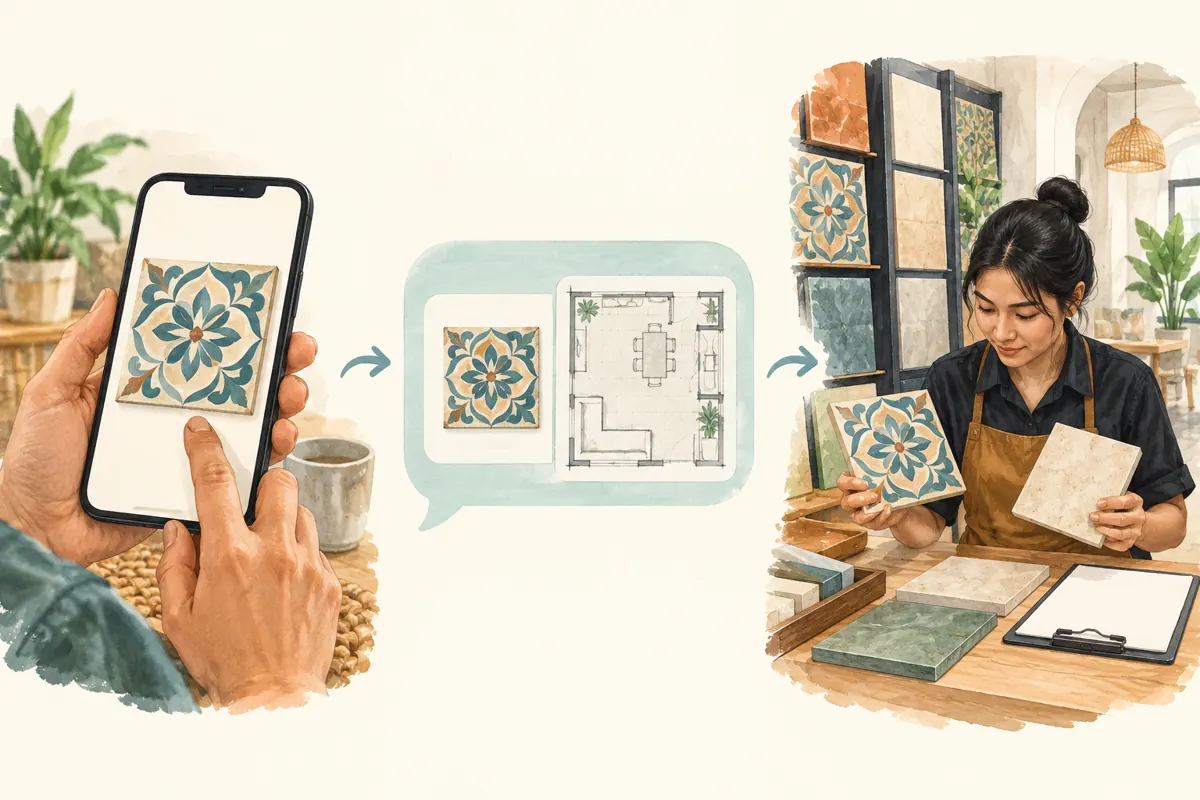
Compare it with the internal sample reference, then confirm the code and relevant variant with the customer. If the image is ambiguous, send a fresh comparison rather than guessing. Use that incident to improve the collection: the sample identifier may be too small, missing from one frame or inconsistent with the showroom's quotation records.
How can a small team judge whether the album is useful?
Look for practical evidence: customers identify samples more clearly, staff can retrieve the matching product, and fewer conversations stall over which design is meant. Record confusing cases and revise the collection. These observations can guide improvements without claiming that an album, a view count or an SMM order caused a sale.
Explore the current service catalogue, create an account, or ask a specific question through support tickets.
- Telegram: Public Post Search, Story Albums, Gift Collections and More
- Telegram Stories: Profile Stories and Privacy Settings
- Telegram: Stories in Channels, View-Once Media and More
- Telegram Channels FAQ: Channel View Counters
Prepared with AI assistance. Illustrations explain the workflow and do not represent customer results.