
22/10/2026 18:10
Which Printer Did They Ask About? Telegram Contact Notes for Cambodian Repair Shops

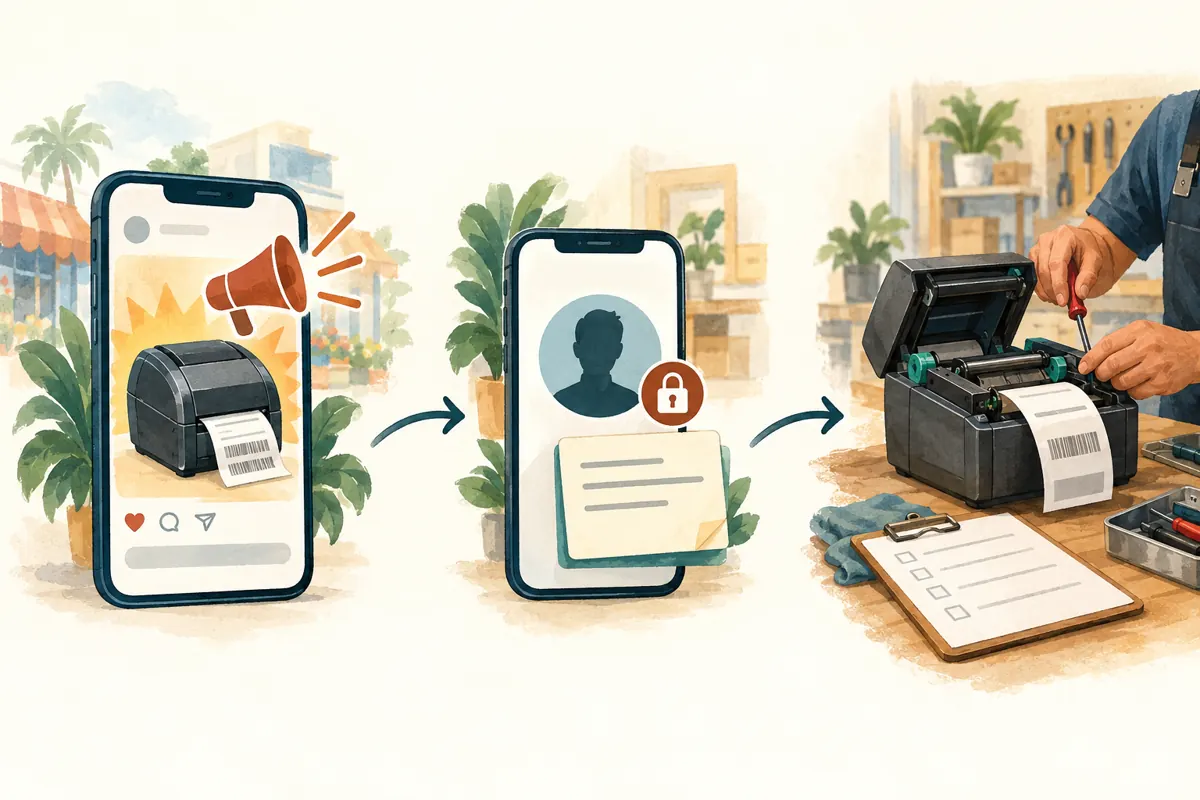
A customer asks about faint printing after seeing your Telegram demonstration. Another sends a photograph of a similar machine but needs replacement label rolls. When both return later with a short message asking whether you can help, remembering the difference matters. For a Cambodian label-printer repair shop, useful promotion includes preparing to handle these conversations accurately. Telegram contact notes offer a place for a brief reminder about a person’s enquiry. Used carefully, they can help you resume a conversation without mistaking interest for a booking or an unresolved symptom for a diagnosis. This workflow connects a clear public post, a factual private reminder and an explicitly confirmed next step.
1. Start with the question your promotion should generate
Choose one enquiry objective before publishing a repair demonstration. For example, invite viewers to send their printer’s model and describe the printing problem. Avoid an opening that implies every faint label needs the same replacement part. A demonstration can show what your workshop examines without promising that a viewer’s machine has an identical fault. This makes the first conversation easier to interpret.
In a hypothetical Phnom Penh shop, the campaign concerns desktop label printers used by small retailers. The post asks for a model photograph and a sample printed on blank test labels. It explains that the shop will review the information before discussing inspection. Customers should not need to expose delivery addresses or buyer details to ask a repair question.
2. Understand what Telegram contact notes actually do
Telegram’s official feature announcement says you can include a private note when adding or editing a contact. The note appears on that person’s profile beneath their bio and is visible only to you. This makes it suitable for a short memory aid. It does not make the note a message that the customer has received, read or accepted.
Open the relevant person’s profile, use the available add-contact or edit-contact action, and look for the note field. Save a short factual reminder, then reopen the profile to check it. Interface wording can differ between apps. If the field is missing, check your app version before reorganizing your workflow around it. Keep the original conversation as the reference for what was actually said.
3. Decide whether a contact needs a note
Use a note when it will resolve a likely future ambiguity: two similar machines, an outstanding model photograph, a requested language for replies or a distinction between consumables and repair. A one-off question about opening hours may not need a lasting entry. Saving every passing interaction creates clutter and makes important reminders harder to notice.
Apply a simple decision process. If the enquiry is complete and needs no follow-up, answer it. If information is missing and the person may return, record the missing item. If an inspection or repair has been agreed, create the normal workshop record and use the contact note only to point yourself toward it. The more consequential the decision, the less appropriate a short personal reminder becomes as its sole record.
4. Write a note that distinguishes facts from assumptions
A useful format contains the date, machine or enquiry, current uncertainty and next action. A hypothetical entry might read: “22 October: asks about faint labels on desktop printer; model not confirmed; awaiting model photo and blank-label sample; no inspection agreed.” That entry is more useful than “printer customer” because it tells you what to check before replying.
Record the customer’s description as a report, not a technical finding. Write “customer reports uneven printing” rather than “damaged printhead” unless your workshop has established that diagnosis. Likewise, “asked about price” does not mean “accepted quote.” These distinctions protect the quality of your next response and stop your own shorthand from creating promises the business never made.
Keep the wording respectful and easy to revise. Avoid guesses about spending power, urgency or reliability. If the customer requests replies in Khmer, that preference may be useful; their apparent nationality or profile photograph is not a reliable substitute for asking.
5. Ask for the evidence that changes your next step
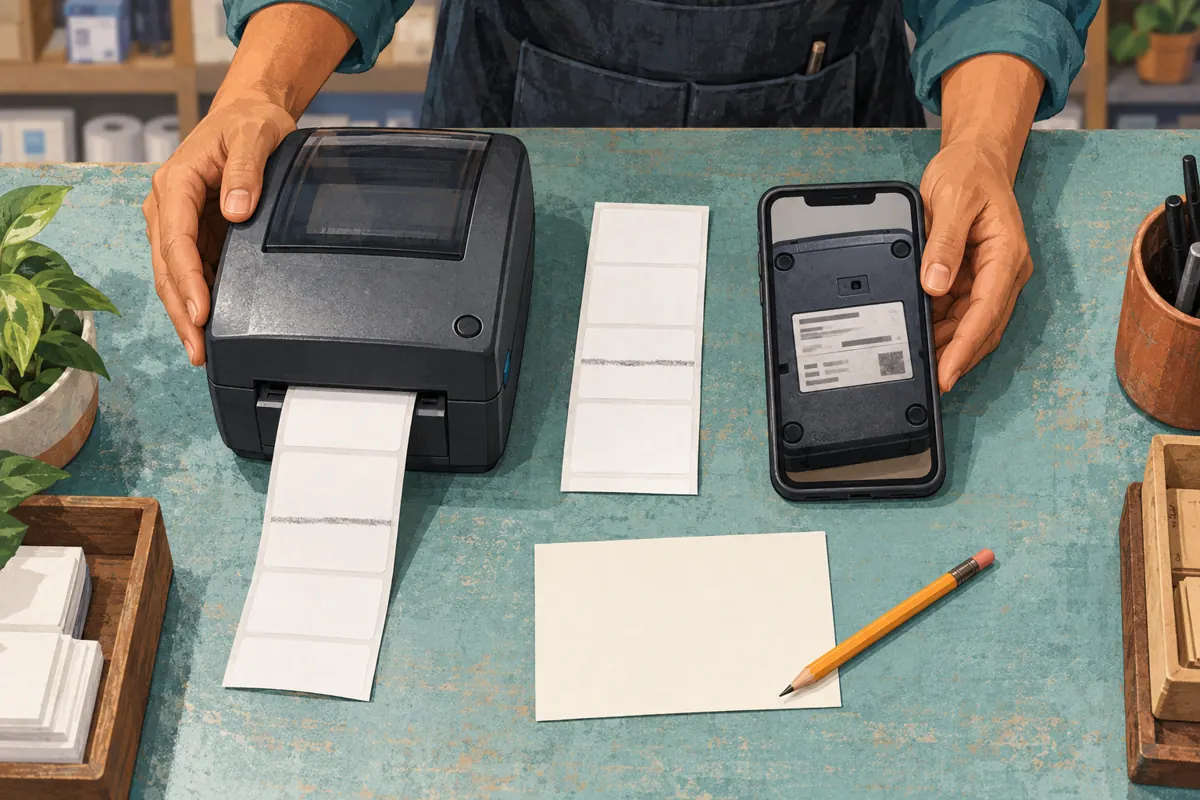
Request information in an order the customer can follow. First establish which printer they mean. Then ask what happens during ordinary use and whether they can provide a non-sensitive sample. Explain why each item matters: the model helps identify the machine, while the sample helps describe the reported problem. Do not turn a marketing conversation into instructions to dismantle equipment.
For a customer writing in Khmer while the model plate uses Latin characters, preserve the model exactly as shown. Do not translate or guess an unclear character. Ask for a clearer photograph when needed. A short voice explanation may help you understand the symptom, but your written reminder should still distinguish the customer’s report from the technician’s later findings.
When the requested evidence arrives, update the note immediately. Replace “awaiting model photo” with the confirmed model or a reference to the workshop record. Leaving the old request in place can cause a returning customer to be asked for something they already supplied.
6. Resume the conversation without pretending to remember everything
Read the note and then check the recent conversation before answering. A reminder can be stale: the customer may have bought another printer, changed the consumable or resolved the problem elsewhere. A useful opening is: “Are we discussing the same desktop printer from your earlier photo, or a different machine?” This verifies context without making the customer repeat the whole history.
In another hypothetical example, a Siem Reap retailer first asks about repair, then returns to purchase labels. A note about faint printing should not steer every later conversation back toward servicing. Update the current enquiry and keep any unresolved repair history in its proper record. Contact context belongs to a person; each transaction still needs its own clear scope.
7. Make customer confirmation explicit
Before arranging an inspection, send a clear summary in the conversation. Identify the machine, what the customer should bring, the proposed visit arrangements and any terms that actually apply. If a charge or timeframe is not yet known, say that it remains to be confirmed. Do not fill the gap with an estimate simply because the promotional post sounded confident.
Wait for the customer’s response before recording an agreed booking. A private note saying “coming tomorrow” cannot establish agreement on its own. Once arrangements are confirmed, use a workshop job reference and record the relevant details there. The contact note can then become a compact pointer, such as “inspection arranged; see workshop job record,” instead of duplicating an entire booking history.
8. Keep private reminders separate from team handovers
Because Telegram describes these notes as visible only to you, do not assume a colleague using a separate account can see them. If another employee will handle the customer, prepare a handover through the shop’s established shared record. Include the machine, confirmed facts, outstanding question and person responsible for the next reply.
Share only what the colleague needs. A technician may need the model and symptom, while the person arranging collection needs the agreed logistics. Neither task requires copying every personal detail from the conversation. Avoid using screenshots of contact profiles as the default handover: a concise job entry is easier to update and less likely to expose unrelated information.
At shift change, check whether responsibility has actually transferred. A personal note that says “colleague handling” is insufficient if that colleague never received the task. Make the assignment explicit in the shared workflow.
9. Put SMM panel activity in a separate record
The supplied public catalogue includes “Telegram - Post Views - [ LAST 5 POST ]”. Its description is empty, so the listing does not establish detailed targeting, delivery conditions or how the relevant posts are selected. If considering it, clarify those matters before making a request. Do not infer Cambodian audience delivery or genuine customer interest from the service name.
For this repair-shop workflow, record any panel request against the public content reference and order record. Keep customer enquiries and repair jobs separately documented. Purchased engagement is not evidence of genuine interest, sales, advertising delivery or Cambodian users. A change in a post’s visible counter cannot tell you which machine a customer owns or whether that person wants an inspection.
Telegram’s Channels FAQ also explains that views of forwarded copies contribute to a channel post’s total, and that view counts are approximate. Therefore, even without panel activity, a view count should not be treated as a list of distinct local prospects. Use actual conversations to establish enquiry context, and explicit agreements to establish bookings.
10. Review the workflow for recurring misunderstandings
After a promotion, review the questions that required clarification. Did people confuse label rolls with repair services? Did they send photographs without showing the model? Did the post make an inspection sound like an immediate repair promise? Use these observations to improve the next public explanation. Remove identifying details before turning an individual conversation into a general educational example.
Common mistakes include copying speculative diagnoses into notes, preserving outdated next actions, treating a saved contact as permission for repeated sales messages and using one note to track several machines without distinction. Another is reporting a rise in post views as a rise in qualified enquiries. Each mistake comes from giving a small piece of information more meaning than it supports.
Set a regular review point for active reminders. Correct inaccurate details, remove information that no longer serves a business purpose and close completed follow-ups. Judge the workflow by whether staff can answer the right question with the right context. Contact notes are useful when they reduce confusion; longer notes are not automatically better.

Frequently asked questions
Can a customer see the note I add to their Telegram contact?
Telegram says contact notes are visible only to you. That makes them a private memory aid, but you should still write them professionally and avoid unnecessary personal details. If the customer needs information, such as inspection arrangements or a request for a photograph, send it directly in the conversation.
Should I add everyone who reacts to a repair post?
No. A reaction does not establish a repair enquiry or permission for sales follow-up. Use notes when an actual conversation creates a practical need to remember context. Someone who asks a complete, simple question may need only a clear answer, without an ongoing contact-management process.
What if one customer owns several label printers?
Make the distinction explicit and use separate job records when needed. A brief note can remind you to confirm which machine the customer means. Ask for the model or the relevant previous photograph before discussing parts, prices or collection. Never assume their latest message concerns the machine from the first enquiry.
Can a contact note replace a repair quotation or booking record?
No. A note records your reminder, not the customer’s agreement. Send the proposed scope and applicable terms to the customer, obtain confirmation and maintain the shop’s normal job record. Use the note to help locate that record rather than storing competing versions of the same arrangement.
How can the shop tell whether a Telegram promotion generated useful enquiries?
Record relevant conversations and their outcomes: missing information requested, model identified, inspection discussed or booking confirmed. When useful, ask which post prompted the enquiry and record the answer as customer-reported attribution. Keep these observations separate from panel delivery and post views. They help explain customer needs without claiming that every interaction came from the campaign.
Explore the current service catalogue, create an account, or ask a specific question through support tickets.
- Telegram: Comments in Group Calls, Notes for Contacts, Suggested Birthdays and More
- Telegram Channels FAQ: What does the eye icon mean?
Prepared with AI assistance. Illustrations explain the workflow and do not represent customer results.